How to Start a Bounce House Business: A Complete Guide for 2026
Learning how to start a bounce house business looks simple from the outside: buy an inflatable, post it online, and book parties. Most businesses that fail get the same three things wrong. They buy residential-grade equipment, skip the legal and insurance groundwork, or never do the math on a single rental. This guide walks through the full process in six steps, with current cost figures from industry sources and a manufacturer's view of the equipment decisions that determine how fast you break even. A lean launch with one or two commercial units typically requires $15,000 to $25,000 all-in, and most new operators go from decision to first booking within 30 to 90 days once equipment, permits and a payment method are in place.
How to Start a Bounce House Business: The Six Steps at a Glance
A bounce house rental business comes together in six moves: validate local demand, register the company and get insured, buy commercial-grade equipment, price your rentals, build delivery and safety operations, then market locally. The table below summarizes each step with its typical cost or timeline, and the sections that follow break every step down.
| Step | Focus | Typical cost or timeline |
|---|---|---|
| 1. Validate the market | Local demand, competitor scan, niche choice | 1 to 2 weeks, no spend required |
| 2. Register and insure | LLC, EIN, business license, liability policy | Roughly $1,700 to $3,800 in year one |
| 3. Buy equipment | First commercial-grade units plus support gear | $2,000 to $5,000 per unit, about $500 for gear |
| 4. Price rentals | 4-hour and 8-hour rates, margin math | Target 60 to 75 percent gross margin |
| 5. Build operations | Delivery, anchoring, weather rules, cleaning | Solo setup takes 15 to 30 minutes per unit |
| 6. Get bookings | Google profile, reviews, local partnerships | From $0 up to $500 per month |
Is a Bounce House Rental Business Worth Starting?
Yes, for operators who treat it as a real business from day one. Demand is structurally recurring: birthday parties every weekend, school carnivals, church picnics and community festivals fill calendars from spring through early fall, and parents consistently choose entertainment that is easy to book and supervise.
For anyone researching how to start an inflatable rental business, the economics are unusually transparent for a small business. A standard commercial bounce house renting at $175 to $225 per day pays back its roughly $1,800 purchase price in 9 to 12 bookings, according to rental software company Booqable's unit economics breakdown. A water slide combo at $350 to $500 per day can recover its cost in a single summer. Obstacle courses rent at $500 to $800 per event and win repeat contracts from schools and churches.
Be honest about the trade-offs before you spend:
- Upside: low entry cost compared with most service businesses, weekend-concentrated work that fits around a job or family, and straightforward scaling by adding units.
- Downside: a 6 to 8-month peak season in most of the U.S., genuinely physical logistics on every job, and real liability exposure that makes insurance and waivers non-negotiable.
Step 1: Validate Your Local Market Before You Spend
Market validation for a rental business is free and takes one to two weeks. You are answering three questions: who is booking, who is already serving them, and what gap is left for you.
Start with demand signals. Join local parent and community groups on social media and watch what people ask for when planning parties. Review the annual calendars of schools, churches and community centers, because their recurring events are the anchor bookings of this industry. Then open Google Maps and list every inflatable rental company within a 30-mile radius: their inventory, price points, delivery fees and reviews go into a spreadsheet. Payment platform JIM, which publishes a startup guide for this trade, recommends documenting at least five competitors this way before buying anything.
Your niche follows from what you find. Backyard birthday parties favor combo bounce houses, school and church events favor obstacle courses and large units, and corporate family days favor packages. One common trap is competing on price alone; a differentiated inventory, such as the first water slide combo in your area, protects your margin far better. And yes, you can run this from home at the start: a rolled 13x13 bounce house fits in roughly a 10x10 footprint, so a garage bay works until the fleet outgrows it.
Step 2: Register the Business and Get Legal
The standard legal stack for a U.S. inflatable rental business is an LLC, a free federal tax ID, a local business license, liability insurance and, in some states, amusement-device permits. Budget roughly $1,700 to $3,800 for the first year, most of it insurance.
Form an LLC through your state's Secretary of State website. Filing fees run about $50 to $500, with most states charging $50 to $200, and the structure keeps business liabilities away from your personal assets. Then get a free Employer Identification Number from the IRS, which takes minutes online and is required for a business bank account. A general business license from your city or county clerk typically costs another $50 to $200 per year.
Do You Need a License to Rent Bounce Houses?
Almost everywhere, yes, at minimum a general business license. On top of that, some states regulate inflatables like amusement rides. New Jersey, New York, Pennsylvania, Florida, Illinois and Texas mandate annual permits, inspections and minimum liability coverage, while states such as Alabama, Mississippi, Montana, Nevada, Wyoming and Utah have no statewide inspection law. Check your state's Department of Labor before your first booking. Public parks add their own layer: expect special event permits, and expect the venue to ask for proof of insurance, sometimes with an "additional insured" certificate naming the venue.
Insurance is the line item you cannot trim. A general liability policy with $1 million to $2 million in coverage costs about $1,500 to $3,000 per year from specialty amusement insurers. Add inland marine coverage for the inflatables themselves, since they are your most expensive assets, and commercial auto once a vehicle is dedicated to deliveries. Require a signed liability waiver for every rental, and note that insurers typically expect anchoring and inspection records consistent with ASTM F2374, the standard practice for inflatable amusement devices.
Step 3: Choose Commercial-Grade Equipment Over Residential Units
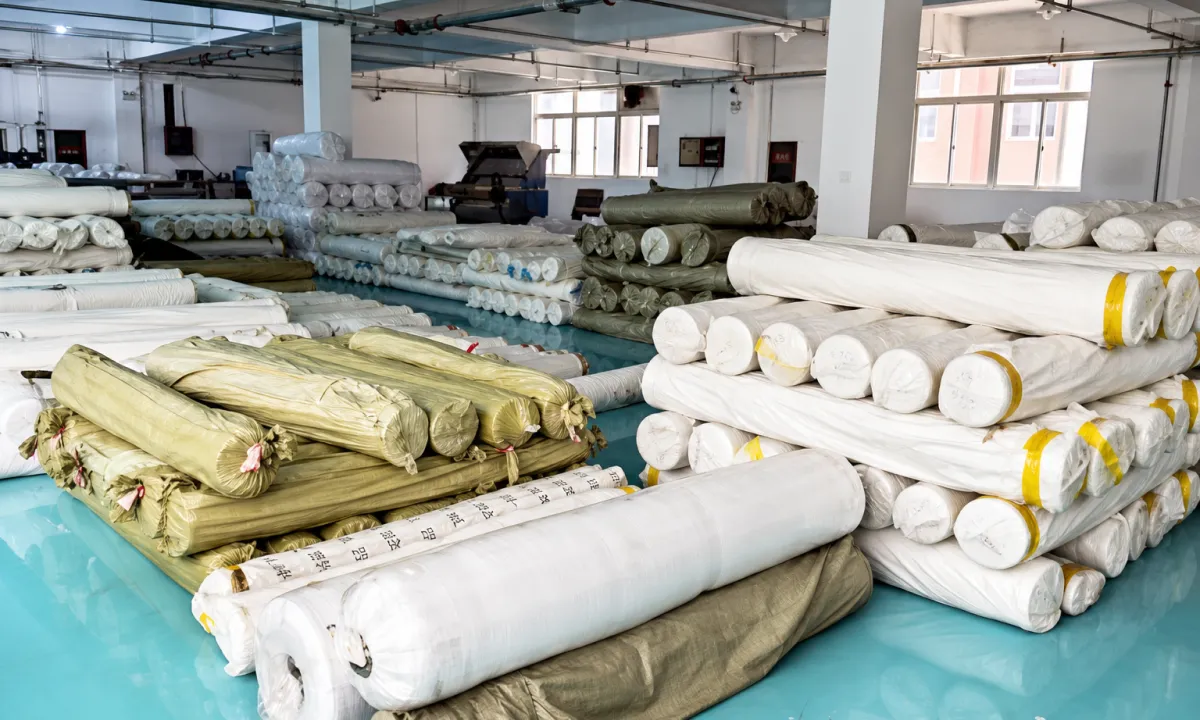
Equipment is the largest startup cost and the decision with the longest shadow. Buy true commercial-grade units: residential inflatables from big-box stores wear out within a season of rental use, are frequently excluded from insurance coverage, and fail the equipment checks that schools and parks apply before letting you set up.
For a first fleet, the widely recommended starting point is a 13x13 commercial combo bounce house with a slide, which runs about $2,200 to $2,800. Combos book more easily than plain bounce houses because the slide reads as extra value to parents. Single commercial units generally cost $2,000 to $5,000 depending on size and features. When you add a second unit, choose a different category, such as a water slide combo, so you can say yes to more types of events instead of duplicating capacity for the same one. Budget about $500 for support gear: a heavy-duty dolly rated for 600+ pounds (around $150), stakes and sandbags (about $100), ground tarps (about $50), and a backup blower at $100 to $150 that will save a party the day a blower fails.
Three checks matter more than the sticker price:
- Material. Commercial units use heavy PVC-coated fabric or reinforced oxford cloth, and the choice involves real trade-offs in weight, durability and drying time. Our oxford cloth vs PVC comparison for inflatables breaks down which fabric suits which use.
- Capacity. Every unit's rated weight limit decides which jobs you can accept and how you write your rental contract. Our bounce house weight limit guide covers typical commercial ratings and how manufacturers set them.
- Documentation. Ask every supplier for the rental-use warranty terms, safety-standard compliance such as ASTM F2374, and their pre-shipment test records. Vague answers here predict problems later.
On that last point, here is what the process looks like from inside a factory. At our own 10,000-square-meter facility in Wenzhou, every commercial inflatable goes through a 12-step production workflow and a 24-hour pre-shipment inflation test that verifies airtightness, seam strength and structural balance on the actual unit. Seams are double-stitched with reinforced bar tacks at stress points, because seam failure is the most common way overloaded units fail in the field. Custom commercial units typically run 15 to 35 working days of production depending on size and finish, so if you are targeting a spring launch, order in winter.

Step 4: Price Your Rentals and Do the Math
Most operators charge a flat rate covering a 4 to 8-hour rental window, delivery, setup and takedown within a defined radius. For a standard 13x13 bounce house, $150 to $350 per rental is the typical U.S. range, with water slide combos commanding $350 to $500 per day.
Set your 4-hour and 8-hour prices against the local competitor rates you gathered in Step 1, then verify that each rental clears a 60 to 75 percent gross margin. JIM's worked example of a $275 four-hour rental shows how the margin holds up once every cost line lands:
| Line item | Amount | Notes |
|---|---|---|
| Rental fee | $275 | 4-hour 13x13 rental, 15-mile delivery |
| Fuel and vehicle | -$20 | Round-trip delivery |
| Labor | -$35 | 2.5 hours at $14 per hour |
| Allocated insurance | -$22 | $2,200 annual policy spread over 100 rentals |
| Allocated marketing | -$10 | $1,000 annual spend over 100 rentals |
| Cleaning and supplies | -$5 | Vinyl cleaner, tarps, wipes |
| Gross profit | $183 | 66 percent gross margin |
Treat that example as a template, not a forecast; your wage rates, delivery distances and booking volume will differ. Two habits protect the math. Take a 50 percent deposit to reserve each date, with the balance due before setup. And build an add-on menu, since extras like concession machines, generators, tables and weekend packages lift the average booking value by 30 to 50 percent across the industry.
Step 5: Set Up Delivery, Safety, and Turnaround Operations
One surprise when learning how to start a bounce house rental business is that logistics, not the event itself, consumes most of the working week. A 5x10 utility trailer behind an SUV or truck hauls two or three units and is enough to start; setup takes a practiced solo operator 15 to 30 minutes for a standard bounce house, and 45 to 90 minutes for large slides or obstacle courses. When volume grows, helpers typically earn $25 to $50 per job, and a dedicated event technician role runs $15 to $25 per hour.
Safety rules are the operational core. Anchor every unit with stakes on grass or weighted sandbags on hard surfaces, brief the customer, and monitor weather with an anemometer on every job. The CPSC cautions against operating inflatables in winds above 15 to 25 mph, and ASTM F2374 sets a 15 mph default shutdown threshold where the manufacturer does not specify a lower limit; deflate immediately if sustained winds reach 15 to 20 mph or gusts exceed 25 mph. Write these thresholds into your rental contract so the decision rule is never negotiated at the curb.
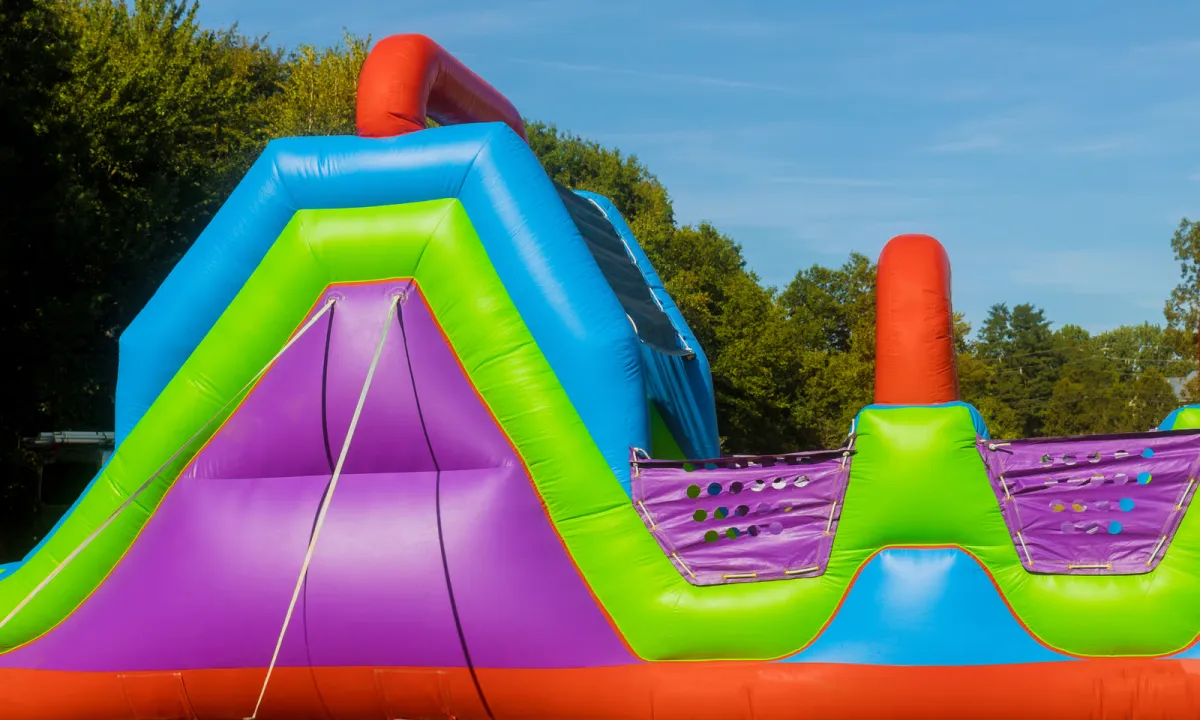
Turnaround discipline is what keeps reviews positive. After every rental, inflate the unit, vacuum it, wipe it down with a vinyl-safe cleaner, and run an inspection checklist for tears and seam stress before it goes back into storage. Our inflatable maintenance and storage guide details the full cleaning, repair and off-season storage routine. Operators who want a formal credential can add SIOTO safety certification, which is built around ASTM F2374 and can help with insurance premiums.
Step 6: Get Your First Bookings
Local visibility beats advertising spend in this trade. Your first move costs nothing: claim and fully populate your Google Business Profile with real photos of your units, your service area and your phone number, because "bounce house rental near me" searches are where most bookings begin.
From there, the channels with the best proven returns are unglamorous and local:
- Reviews. Ask every customer for a Google review after pickup. A profile with 20 five-star reviews wins the click over a competitor with none, and reviews compound for free.
- Short video. Post clips of your units in action on Facebook, Instagram and TikTok, tagged with your city. Two or three posts a week during peak season is enough to stay visible.
- Referral partners. Caterers, DJs, party planners and event venues constantly field inflatable requests. A 10 percent referral fee or a standing discount for schools and churches turns them into a sales channel; a single school carnival can mean four to six units and $2,000 to $4,000 in one day.
- Paid local ads, later. Google Local Services Ads run about $200 to $500 per month and put you above ordinary search results, but they only pay off once your reviews and photos are solid.
Plan cash flow around the 6 to 8-month peak. Off-season revenue comes from indoor venues such as gymnasiums and community centers, corporate holiday events and school indoor carnivals, so build those relationships before the cold months arrive.
Ready to Start? Source Equipment Like It Matters, Because It Does
Every step in how to start a bounce house business eventually comes back to the equipment: it is your largest cost, your safety record, your review score and your resale value in one purchase. Choose commercial-grade units with documented testing, and the rest of the playbook in this guide compounds from there.
As a manufacturer of custom commercial inflatables since 2006, we build bounce castles, slides, obstacle courses and event inflatables for rental fleets and event companies worldwide, with factory-direct pricing, Pantone-matched custom branding and a 24-hour inflation test on every unit before it ships. Browse our custom giant inflatable range for a sense of what commercial-grade construction looks like, or send us your target unit list and launch date. Our team will reply with 3D mockups and a quotation within 24 to 48 hours.
FAQ
A lean launch with one or two commercial units typically runs $15,000 to $25,000: a commercial bounce house at $2,000 to $5,000, first-year liability insurance at $1,500 to $3,000, LLC filing at $50 to $500, and a used delivery vehicle that often starts around $10,000. Starting from a garage with one combo unit sits at the low end of that range.