Commercial Bounce House Prices: 2026 Cost Breakdown for Buyers
New commercial bounce houses sell for anywhere between $1,500 and $8,000 in 2026, and used units change hands for as little as $800. That spread confuses first-time buyers: two castles with the same footprint can differ by $2,000, and the reason is rarely visible in listing photos. Commercial bounce house prices are set by fabric weight, seam construction, blower sizing, safety testing, and who you buy from.
This guide breaks down current prices by type and size, explains what pushes the number up or down, totals the hidden costs most listings leave out, and runs the payback math for a rental business. The goal is simple: help you recognize a fair price before you send a purchase order.
How Much Does a Commercial Bounce House Cost? (Quick Answer)
A standard new commercial bounce house costs $1,500 to $3,000 in 2026. Combo units with slides run $2,200 to $3,500, water combos $2,500 to $4,500, and large obstacle courses $3,500 to $8,000 or more. Used commercial units typically sell for $800 to $4,000 depending on age and condition. Factory-direct pricing from manufacturers sits well below U.S. retail, which the final section of this guide covers in detail.
| Type | Common size | Typical new price (U.S. retail) |
|---|---|---|
| Standard bounce house | 13 x 13 ft | $1,500 - $2,500 |
| Castle / themed bounce house | 15 x 15 ft | $1,700 - $3,000 |
| Combo with slide | 13 x 13 to 15 x 15 ft | $2,200 - $3,500 |
| Water combo | 15 x 15 ft and up | $2,500 - $4,500 |
| Obstacle course | 30 ft and longer | $3,500 - $8,000+ |
| Custom / large-format build | Project-based | $5,000 - $10,000+ |
These ranges consolidate current listings from U.S. suppliers, such as BounceWave, where standard units start at $1,595 and castle units run $1,695 to $2,695, plus published cost guides from the rental industry. Treat any single number as a midpoint, not a quote: size, fabric, printing, and included accessories move the real figure in both directions.
Commercial vs. Residential Bounce Houses: What the Price Gap Buys
Residential bounce houses from big-box stores cost $300 to $1,200. Commercial units start where those prices end. The gap pays for engineering, and the specification sheet shows exactly where the money goes:
| Factor | Residential unit | Commercial unit |
|---|---|---|
| Fabric | Light nylon or 8-12 oz coated polyester | 15-18 oz PVC-coated tarpaulin or reinforced oxford |
| Seams | Single stitching | Double-stitched, bar tacks at stress points |
| Blower | Small, intermittent duty | Continuous-duty, sized to chamber volume |
| Safety standard | Toy-grade | Built to ASTM F2374 / EN 14960 practice |
| Service life | One to two rental seasons | 5-10+ years, 50-100+ deployments |
| Insurance and venues | Frequently excluded | Accepted with documentation |
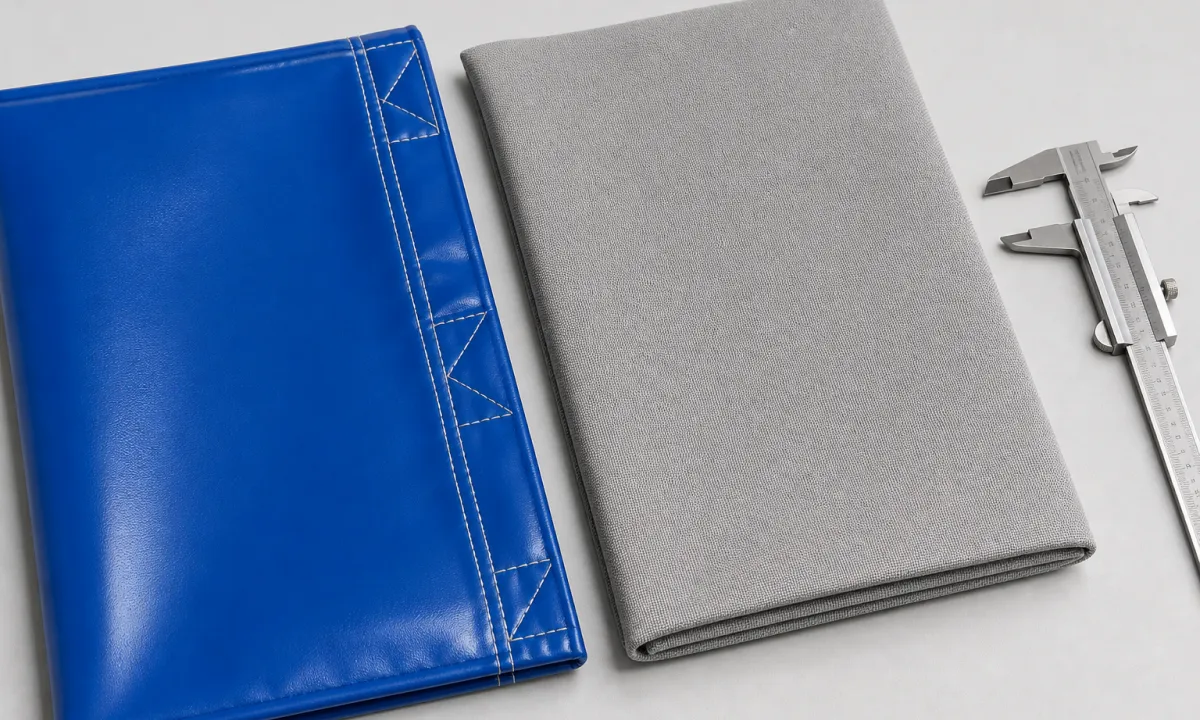
Fabric is the biggest single cost driver. Commercial units use heavy PVC tarpaulin in the 18 oz class, while residential toys use much lighter nylon or thin oxford. The two fabrics behave differently over a working life: PVC tarpaulin is airtight and suits sealed or constant-air designs, and reinforced oxford wears well and holds printed color. Our oxford cloth vs PVC comparison breaks down which fabric suits which duty cycle.
Seams decide the second half of the story. Panels rarely fail in the middle; seams fail first, which is why commercial builds double every stitch line and reinforce stress points. In our Wenzhou facility, every seam on a commercial unit is double-stitched with bar tacking at stress points, handled by a sewing crew of more than 50 workers. Each unit then passes a 24-hour pre-shipment inflation test covering air retention, seam integrity, and structural balance. These steps add cost, and they are also what separate a five-year asset from a one-season liability.
Bounce House Prices by Type and Size
Type and size set the baseline price before any customization enters the quote. Larger footprints consume more vinyl, need bigger blowers, and take longer to sew, so price climbs with both dimensions and feature count:
| Type | Size range | Price band | Best fit |
|---|---|---|---|
| Standard bounce house | 13 x 13 ft | $1,500 - $2,500 | Highest booking volume, birthday parties |
| Castle bounce house | 15 x 15 ft | $1,700 - $3,000 | Themed events, schools, festivals |
| Combo with slide | 13 x 13 to 15 x 15 ft | $2,200 - $3,500 | First-fleet choice, books most easily |
| Water combo | 15 x 15 ft and up | $2,500 - $4,500 | Summer peak-season premium |
| Obstacle course | 30 - 70 ft | $3,500 - $8,000+ | School and corporate events |
| Custom themed build | Project-based | $5,000 - $10,000+ | Brand activations, FEC anchors |
For a first fleet, the widely recommended starting point is a 13 x 13 commercial combo with a slide, which runs about $2,200 to $2,800. Combos book more easily than plain bounce houses because the slide reads as extra value to parents, and one unit covers two use cases. Buy the workhorse first and add specialty units once the booking calendar proves demand.
What Drives the Price? Material, Stitching, Blowers, and Certification
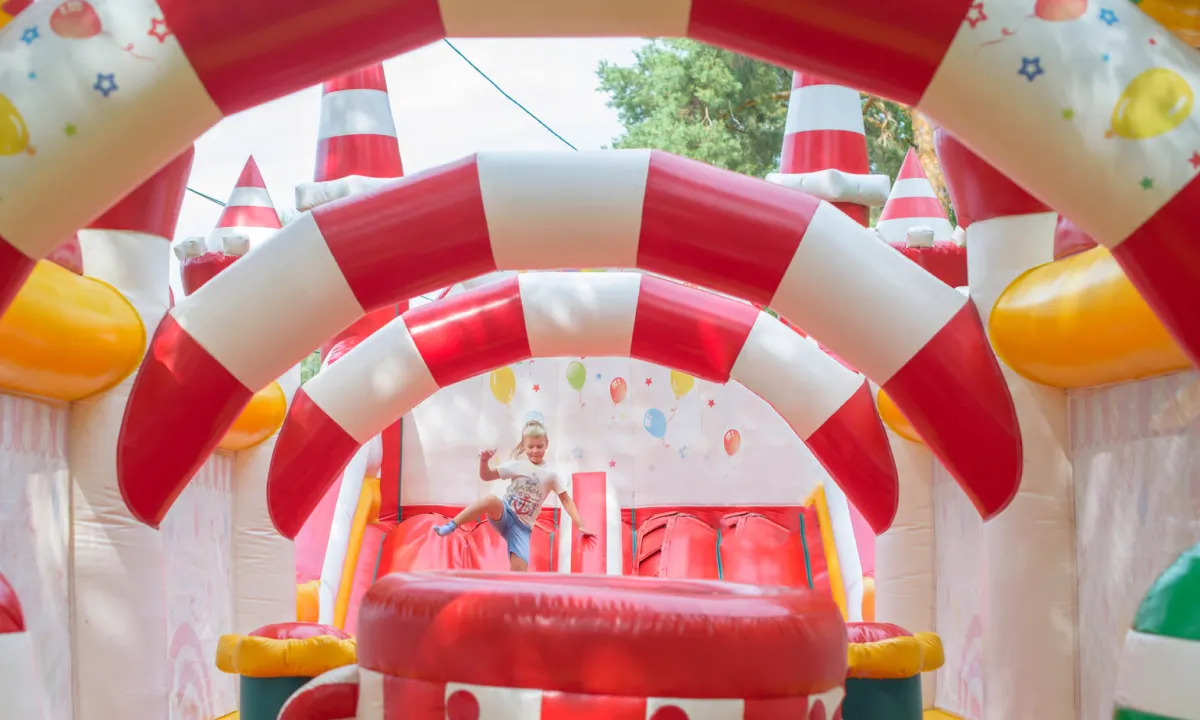
Four specification items explain most of the price difference between two similar-looking units:
- Fabric weight. Heavier PVC costs more per yard and survives more deployments. A 15 oz unit sits at the entry end of commercial pricing, while 18 oz class material anchors the professional end.
- Seam construction. Double stitching with bar tacks at anchors, entrances, and slide joints adds labor hours to every unit. Water units need welded seams, a different process with its own tooling cost.
- Blower sizing. The blower must hold the structure rigid at maximum rated load, so its airflow has to match chamber volume. A continuous-duty commercial blower alone retails for $250 to $360, and undersized blowers let walls sag under load.
- Certification and testing. Compliance with ASTM F2374 practice and EN 14960, plus documented pre-shipment testing, adds factory time that budget listings skip.
Certification deserves a second look because it carries a hidden price implication. Schools, parks, and corporate venues check equipment documentation before letting an operator set up, and insurers expect anchoring and inspection records consistent with ASTM F2374. A cheaper unit without documentation can be unbookable for exactly the events that pay the best rates. In purchasing terms, missing paperwork is a recurring revenue cost, not a one-time saving.
Printing and customization sit on top of these four items. Full-coverage digital printing with Pantone color matching turns a plain castle into branded equipment, and themed shapes add pattern-making and design hours to production. Customization typically moves a unit from the middle of its price band to the top, and branded units also command higher rental rates because they photograph better at events.
Hidden Costs: Shipping, Duties, Blowers, and Accessories
The listing price is rarely the total. Before comparing two quotes, confirm each of these line items:
- Blower inclusion. Some listings sell the blower separately. Confirm what ships in the crate, and budget $250 to $360 per unit if blowers are not included.
- Support gear. Plan about $500 for a heavy-duty dolly (around $150), stakes and sandbags (about $100), ground tarps (about $50), and a backup blower ($100 to $150) that saves an event the day a blower fails.
- Freight. Domestic U.S. shipping typically adds $200 to $500 per unit. International orders move as ocean freight, so the landed cost builds in layers: FOB unit price, ocean freight, import duty and customs fees, then last-mile delivery. Ask every supplier for a landed quote, because a low ex-works price with an expensive freight arrangement can lose to a higher price with freight included.
- Insurance. Commercial liability coverage runs $800 to $2,000 per year, and inland marine coverage protects the units themselves as your most expensive assets.
- Maintenance. Repair kits, vinyl-safe cleaner, and seasonal storage keep ratings valid season after season.
A realistic first-unit budget therefore lands above the sticker price. A $2,000 combo with support gear, freight, and first-year insurance totals roughly $3,500 to $4,000 before the first booking.
New vs. Used Commercial Bounce Houses
Used commercial units typically sell for $800 to $4,000. Units two to three years old go for 50 to 60 percent of their original price, and older units drop to 30 to 40 percent. Used equipment makes sense for testing a market or adding a backup unit, provided you inspect it like an asset purchase:
- Seams under full inflation, especially at anchors, entrances, and slide joints
- Blower hours, bearing noise, and airflow against the rated spec
- Repair history and patch quality
- Mold, odor, and storage conditions
- Certification labels and whether any warranty transfers
The core of a rental fleet should still be new units with full documentation, since insurance and venue checks attach to paperwork that used units often lack.
Can a Commercial Bounce House Pay for Itself?
Yes, and faster than most equipment investments. A standard commercial unit renting at $175 to $225 per day pays back its roughly $1,800 purchase price in 9 to 12 bookings, according to rental software company Booqable's unit economics breakdown. The math scales with unit tier:
| Unit tier | Purchase price | Typical rental rate | Bookings to break even |
|---|---|---|---|
| Standard 13 x 13 | $1,500 - $1,800 | $175 - $225 / day | About 8 - 10 |
| Combo with slide | $2,200 - $2,800 | $200 - $300 / day | About 9 - 12 |
| Premium / obstacle | $5,000 - $8,000 | $250 - $400 / day | About 15 - 25 |
Utilization, not purchase price, decides profitability. Units generating 15 to 20 rentals per year recover their cost within 12 to 18 months even after operating expenses, and most U.S. markets run a 6 to 8 month peak season. Our guide on how to start a bounce house business walks through the full startup budget, insurance layer, and pricing strategy.
How to Spot a Fair Price and Avoid Fake Commercial Units
Some listings label residential-grade products as commercial. Five questions separate real commercial builds from relabeled toys:
- What is the fabric weight in ounces? (Expect a clear answer in the 15-18 oz class.)
- How are seams constructed, and where are stress points reinforced?
- What is the blower's horsepower, airflow rating, and duty cycle?
- Can the seller provide pre-shipment test records and compliance documentation for ASTM F2374 or EN 14960?
- What are the warranty terms for rental use, in writing?
Red flags include "commercial grade" claims with no fabric specification, listings that show only stock renders, and prices far below market with no documentation. Weight limits offer another quick sanity check: honest commercial ratings state tested capacity on the label, and our bounce house weight limit guide shows how manufacturers set and verify those numbers.
Buying Direct From a Manufacturer: What Changes
U.S. retail prices carry importer, distributor, and dealer margin layers. Factory-direct pricing removes several of them: published ranges from Chinese manufacturers list standard commercial units at $300 to $800 and combo units at $600 to $1,500. Compare on landed cost, using the freight structure from the hidden-costs section, and the gap still favors direct buying for fleet orders.
Price is only part of what changes. Buying direct gives you control over the specification itself: fabric weight, seam construction, blower matching, dimensions, and full-coverage printing matched to your brand colors. It also changes the timeline, since production slots and ocean freight replace domestic stock, so orders need planning by weeks rather than days.
Batch orders widen the gap further. Per-unit prices fall as quantities rise, because pattern-making and print setup costs spread across the run, and freight per unit drops once an order fills a pallet position or a container. Operators replacing several units in one season usually save more by consolidating into one factory order than by negotiating individual retail discounts.
We have built custom inflatables since 2006 in a 10,000-square-meter facility in Wenzhou, with a 108-person team covering 3D design, printing, sewing, and testing, and more than 3,000 projects delivered per year across 40+ countries. Every commercial unit goes through a 12-step production workflow and a 24-hour pre-shipment inflation test, and our team returns a design proposal with a factory-direct quotation within 24 to 48 hours.
If you are pricing a first fleet or replacing aging units, send us your target sizes and themes. We will spec the fabric, seams, and blowers for your duty cycle and quote direct from the production line. Start with our custom commercial inflatables catalog, or contact the team with your project brief.
FAQ
A standard new commercial bounce house costs $1,500 to $3,000 in 2026. Combo units with slides run $2,200 to $3,500, water combos $2,500 to $4,500, and obstacle courses $3,500 to $8,000 or more. Used commercial units sell for $800 to $4,000, and factory-direct pricing from manufacturers sits below U.S. retail.