Inflatable Arch for Events: A Manufacturer's Complete Buyer's Guide
Every runner who crosses your finish line photographs one thing first: the structure above it. For event organizers and brand teams, an inflatable arch is often the most photographed asset in the entire production budget, yet it is usually specced in a hurry and bought on price. That is how arches end up undersized for the camera, faded after one season, or pinned down with hardware that fails in the first strong gust. This guide walks through the buying decisions in the order you will actually face them: what an arch earns for an event, which type fits your scenario, the air system, sizing, materials and printing, branding options, anchoring, and finally cost and lead time. Spec it once, spec it right.
What an Inflatable Arch Actually Does for Your Event
An inflatable arch does four jobs at once: it stays visible from hundreds of meters away, it carries more branding surface than any banner, it anchors every finish-line and entrance photo, and it deploys in minutes on almost any ground. Few event assets combine reach, branding, and logistics this efficiently.
The value shows up the morning after. When participants post their photos, the arch is in nearly every frame, which makes it the photographic identity of the event. A rigid truss gantry can do the same job, but it travels in a truck, needs a rigging crew, and takes hours to stand up. An arch rolls out of a storage bag and inflates while the coffee is still hot.
Since 2006, we have built arches for marathons, brand activations, sports events, grand openings, and city-scale art installations, from a standard 6-meter race-line arch to a 20-meter sculptural archway with LED integration. The engineering, printing, and global delivery all happen in-house, which is why the advice below comes from production floors rather than catalog pages.
Match the Arch to Your Event Type
Start from the event, never from the catalog. The right arch follows from three conditions: what passes under it, who photographs it, and how long it must stand. Fix those three answers first, and every later decision, from size to printing, becomes straightforward.
| Event scenario | Recommended style | Why it works |
|---|---|---|
| Road races, fun runs, cycling | Classic rounded or rectangular start finish arch | Instant recognition, wide photo-friendly curve, fast setup between race waves |
| Marathon or triathlon main arch | Large-span arch, 12 m and above | Clears timing mats, support vehicles, and broadcast positions |
| Grand openings and retail entrances | Branded silhouette or angled arch | Flat panels put logos at eye level right at the door |
| Festivals and family events | Rainbow or artistic arch | High visual appeal, doubles as a check-in landmark |
| Multi-sponsor tournaments | Arch with replaceable banner zones | Maximum sponsor inventory on a single structure |
| Brand activations and product launches | Custom sculptural arch | The silhouette itself becomes the campaign signature |
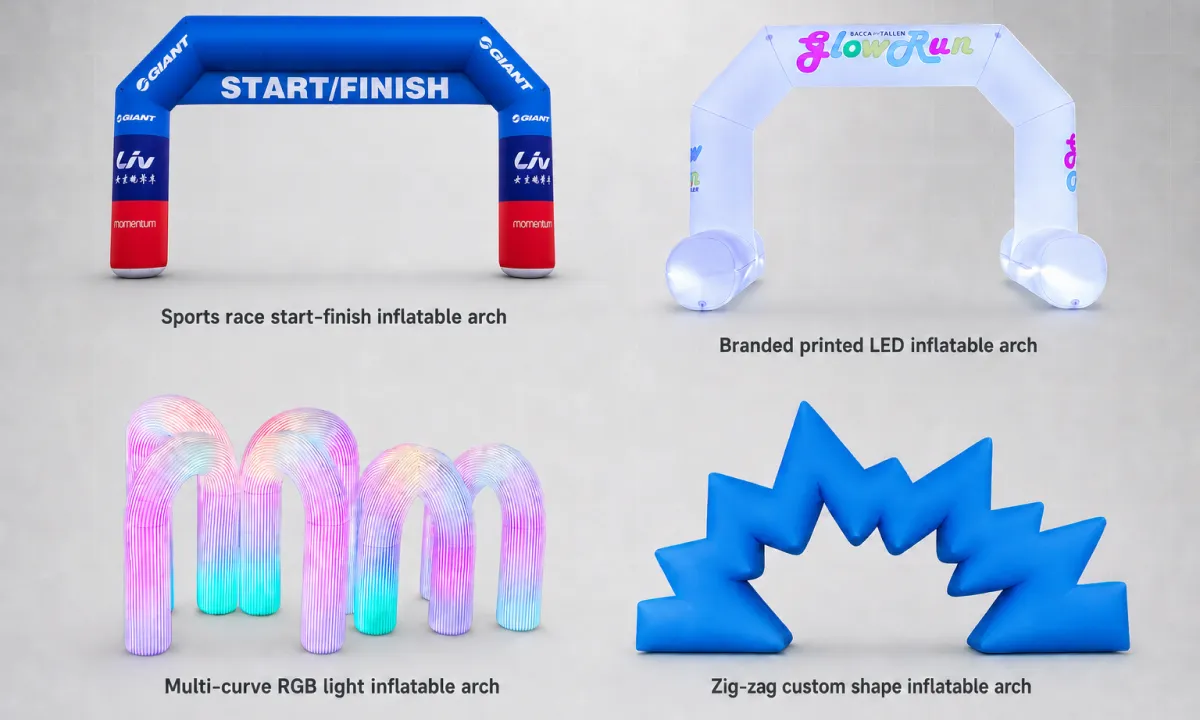
Races and Start/Finish Lines
A start finish arch works harder than any other event arch. It frames the timing mats, it appears in every finisher photo, and it often comes down and goes back up between race categories. What many organizers search for as a blow up finish line is, in production terms, a constant-air arch in the 6 to 12 meter range with full-color printing on both faces, because spectators stand on both sides of the road. If your race is timed, confirm the span clears the timing mats plus the safety margin your timing provider requires, and plan anchoring for asphalt, since most race routes cannot take ground stakes. An inflatable finish line arch also needs a blower placement plan: power cables and fan noise should stay out of the finish chute and away from the announcer.
Entrances, Festivals, and Brand Activations
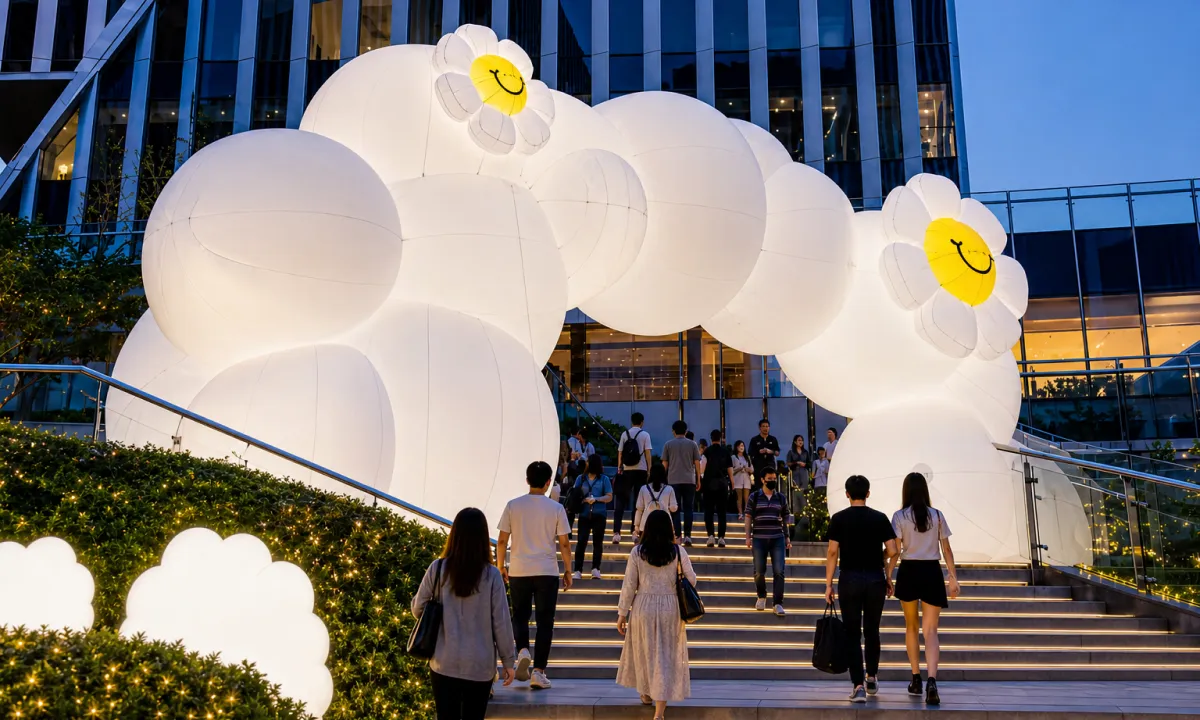
An inflatable entrance arch does a different job: it converts foot traffic into an audience. Placed at a venue gate, a mall atrium, or a festival entry, it marks the threshold of the experience and funnels visitors toward the check-in or the main stage. For indoor venues, measure ceiling clearance before anything else, and plan for sandbag anchoring rather than stakes. For outdoor festivals, an inflatable entrance can run all weekend with a constant-air blower and a simple weather watch. If you want shape ideas beyond standard geometry, our roundup of creative inflatable arch designs shows what custom silhouettes look like in real projects.
Constant Air vs. Sealed Air: The First Technical Decision
Most event arches run on constant air: a blower keeps the structure firm for as long as the event lasts. Sealed-air arches inflate once and hold pressure without power, which suits silent venues and short indoor activations. Choose by venue power and event duration, and never by unit price alone.
| Factor | Constant-air arch | Sealed-air arch |
|---|---|---|
| Power | Continuous 110V / 220V outlet or generator | One-time inflation, then none |
| Typical span | Full range, including 20 m and above | Usually under 8 m |
| Event duration | Multi-hour and multi-day events | Short activations |
| Noise | Blower runs at roughly 75 to 85 dB | Silent after inflation |
| Temperature swings | Stable, blower compensates | Pressure shifts with heat and cold |
| Best for | Races, festivals, large spans, long days | Showrooms, malls, venues without power |
For city-scale arches above 20 meters, constant air is mandatory. For a race finish line far from any outlet, a generator-backed constant-air system is the practical answer. We manufacture both formats, so the recommendation follows your venue rather than our inventory.
Sizing: Measure Once, Order Right
A quick field rule covers most cases: arch width should be at least 1.5 times the widest group or vehicle passing through it. For running events, allow 6 to 8 meters at the start line. For vehicle entrances, measure the tallest vehicle and add at least one meter of clearance above it.
Before you request a quote, take four measurements on site:
- Clear width of the route at the exact arch position, curb to curb or wall to wall.
- Height limits above the position: tree branches, cables, mall ceilings, stage rigs.
- Anchoring radius around each leg, because ropes and stakes extend well beyond the footprint.
- Everything that passes under the arch: runners only, or also timing vehicles, cameras, and broadcast cranes.
Standard event arches span 3 to 15 meters. Sculptural and city-scale projects run from 15 to 30 meters and beyond, and anything above 20 meters includes a structural engineering review before production. When in doubt between two sizes, go larger: an arch that reads small in photos is the most common regret we hear from first-time buyers.
Materials and Printing: One Event or Five Seasons
Material and print decide whether an arch survives one event or five seasons. A commercial-grade arch with proper care lasts 5 to 10 years or more, across 100 to 200 deployment cycles, so fabric choice is a budget decision with a long tail.
For arches, the working materials are Oxford fabric, PVC tarpaulin, and PU-coated fabric, selected by environment and printing requirement. Oxford carries vibrant full-color print and packs light; PVC tarpaulin takes rough outdoor duty. Whichever surface you choose, look for double-stitched seams with reinforced bar tacking at the base connection points, because that is where load concentrates on windy days. For a deeper material comparison, see our guide on Oxford cloth vs PVC.
Printing is Pantone-matched large-format dye-sublimation, and logos stay sharp from 30 meters away. Both faces of the arch print independently at the same color accuracy. Race arches usually run identical artwork front and back so the message reads in both directions. Brand arches often split the canvas: primary brand on the entry side, sponsor logos on the exit side. Since each face prints independently, the second side adds exposure without adding design complexity.
Branding That Photographs Well: Logos, Banners, and Lighting
Cameras find two places on an arch first: the crown and the upper legs. Put primary branding there, keep text short and legible at 30 meters, and the arch does its media job. Everything else on the surface is secondary inventory.
If the same arch serves multiple events, skip permanent full-surface printing for sponsor zones. Hook-and-loop or hanging banner attachments let you swap sponsors, event names, or seasonal themes without replacing the structure, which is the standard setup for annual races with rotating sponsors. A custom inflatable race arch with replaceable banner zones pays for itself by the second or third event.
Lighting roughly doubles an arch's effective use, because a non-illuminated arch reads strongly in daylight and disappears at dusk. Three integration levels cover the range:
- External spotlight illumination, lowest cost, uses the event's lighting rig.
- Internal LED strips, mid cost, a soft glow for night ambience.
- Full RGB matrix with DMX or APP control, high-end, synchronized with the show lighting.
LED systems are engineered into the arch during 3D modeling rather than retrofitted, so decide on lighting before production, not after. Every option above is available on a custom inflatable arch built to your brand guidelines.
Event-Day Reliability: Anchoring, Wind, and Setup
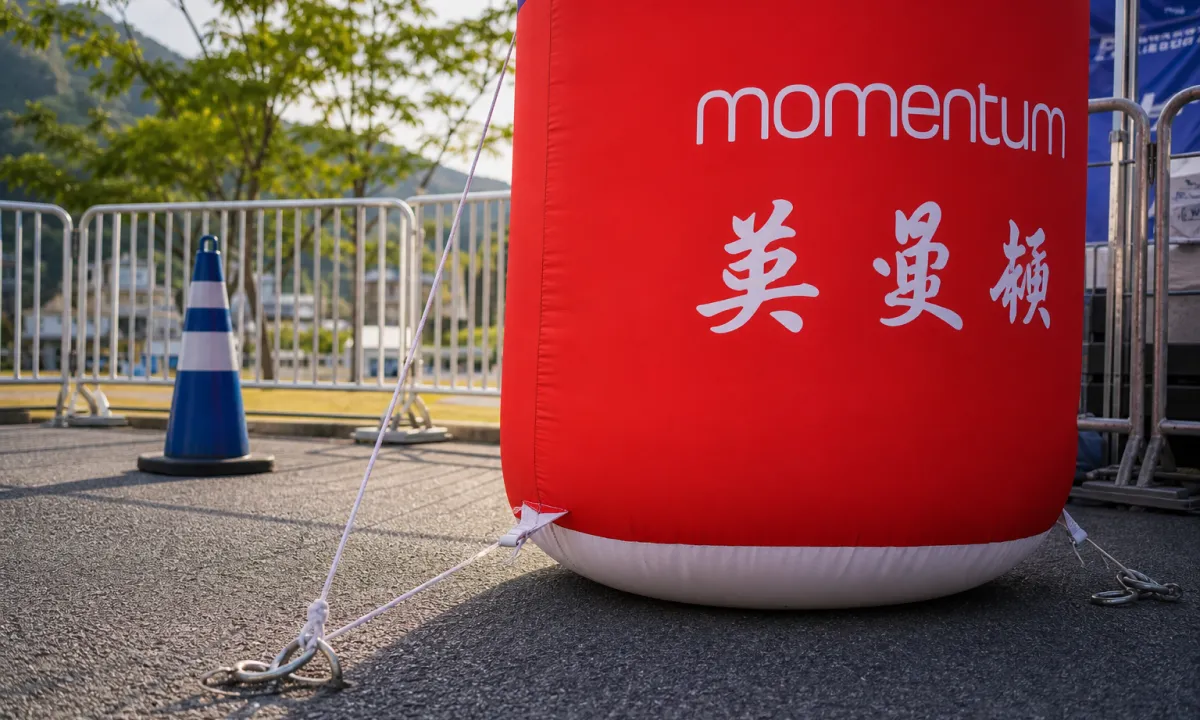
Anchoring decides whether the arch is still standing in the afternoon. Match the kit to the surface, respect the wind rating, and assign one crew member to weather watch. Most event-day failures trace back to anchoring shortcuts, rarely to product defects.
- Grass, dirt, or beach: ground stakes plus sandbags, with deeper stakes for sandy soil.
- Concrete, asphalt, or plaza tile: sandbag-only anchoring, or ballast water bags for larger arches.
- Indoor venues: sandbag base, and remember blower noise in quiet environments.
- Coastal or exposed sites: extended anchoring with ground anchors or structural tie-downs, engineered per project.
With the full anchoring kit, our arches handle winds up to 38 km/h (Beaufort Force 5). Above that threshold, deflate and wait. Setup itself is fast: standard sizes inflate in under 5 minutes, large sculptural arches take 15 to 30 minutes, and teardown runs at roughly the same pace. Every order ships with the blower, anchoring kit, storage bag, and setup guide, so event-day logistics stay simple.
Budget and Lead Time: What Drives the Price
Four variables drive an arch's price: span, shape complexity, print scope, and lighting. A standard rectangular arch is the fastest and lowest-cost build. A branded silhouette typically adds 10 to 20 percent to the base cost. A sculptural form sits in the premium tier. Lighting adds by level, from external spotlight to full RGB control.
Production runs 10 to 25 days depending on shape complexity and printing scope, counted from design approval. Before that, a free 3D rendering usually arrives within a few business days of your brief. After production, add international shipping time. The practical advice: start the conversation well before your event date, because design revisions and transit are the two stages buyers underestimate. MOQ is one piece, every unit carries CE and UL certification and a 12-month warranty, and everything is made in our 10,000 m² Wenzhou facility through a 12-step process from design to transportation, which you can see in detail on our custom inflatable design process page.
To get an accurate quote on the first exchange, send these with your inquiry:
- Shape direction: standard, branded silhouette, or sculptural.
- Target span and height in meters or feet.
- Single-sided or double-sided printing.
- Lighting: none, internal LED, spotlight, or full RGB.
- Deployment environment: indoor or outdoor, and the surface type.
- Event date and duration.
- Brand assets: logo file, Pantone codes, and reference images.
A well-specced inflatable arch outlives the event it was bought for, showing up season after season in photos, broadcasts, and sponsor reports. If you are planning a race, an opening, or a brand activation, send us the event type and venue details, and we will help you spec the arch, render it in 3D, and lock a production timeline around your date.
FAQ
Standard sizes set up in under 5 minutes: connect the blower, secure the anchoring kit, and the arch is live. Large sculptural arches or spans over 15 meters typically take 15 to 30 minutes due to the anchoring scope. Teardown runs at roughly the same pace.