Sealed vs Constant Air Inflatables: Choosing by Size and Power
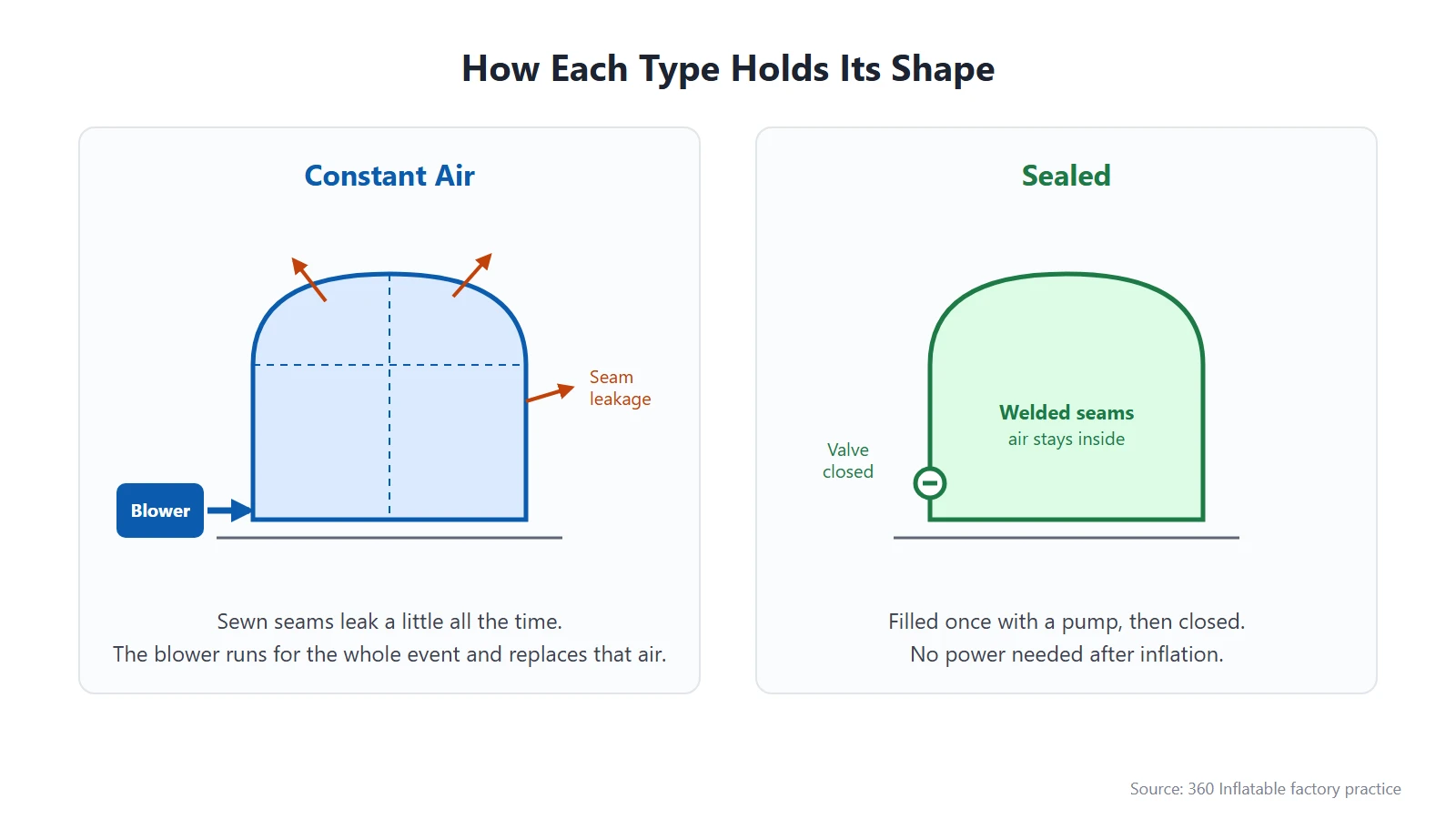
Sealed and constant air are the two ways an inflatable holds its shape. A constant air inflatable has a blower that runs for as long as the inflatable is on display and replaces the air that escapes through its seams. A sealed inflatable, also called an airtight inflatable, is filled once with a pump and then closed, so it stays inflated without power.
The two types differ most in three conditions, so check them in this order before you order:
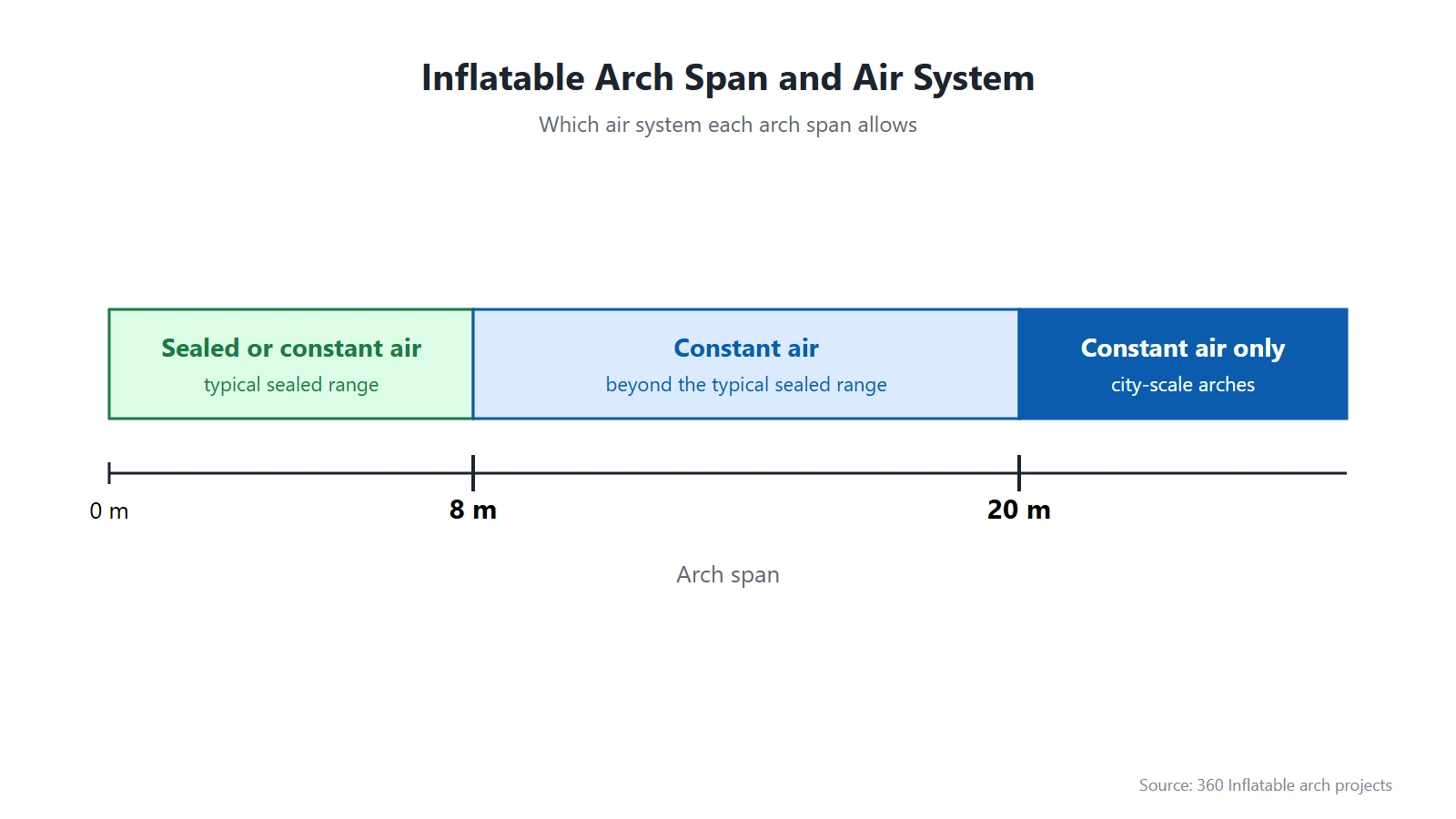
- Size: sealed arches are typically limited to spans under 8 m. City-scale arches and arches of 20 m or more need constant air.
- Power supply: a constant air inflatable needs a power outlet or a generator for the whole event. A sealed inflatable needs power only while it is being inflated.
- Weather and event length: a constant air inflatable keeps the same firmness through the day. A sealed inflatable gets firmer in the sun and softer as the air cools.
The sections below explain why the two types behave this way and then cover each condition in turn. They end with a decision table by event type and a list of what to send the factory with your quote request.
What Is the Difference Between Sealed and Constant Air Inflatables?
The difference is where the air comes from during the event. A constant air inflatable gets a steady supply from its blower, while a sealed inflatable keeps the air it was filled with. Constant air inflatables are also called continuous air or air blown inflatables; this article uses "constant air" throughout. The table shows how that one difference plays out on site.
| Factor | Constant air | Sealed |
|---|---|---|
| Air supply | Blower runs during the whole event | Filled once with a pump, then closed |
| Power on site | Power outlet or generator for the whole event | Only while inflating |
| Noise | Steady blower hum | Silent once inflated |
| Size | Required for 20 m+ arches and giant inflatables | Arches typically under 8 m span |
| Temperature | Firmness stays the same | Firmer in heat, softer as it cools |
| Packed size | Blower ships with the inflatable | Only a pump; packs smaller |
| Typical products | Giant inflatables, large arches, tunnels, mascot costumes | Small arches, indoor displays, helium inflatables |
Why They Behave Differently: Sewn Seams vs Welded Seams
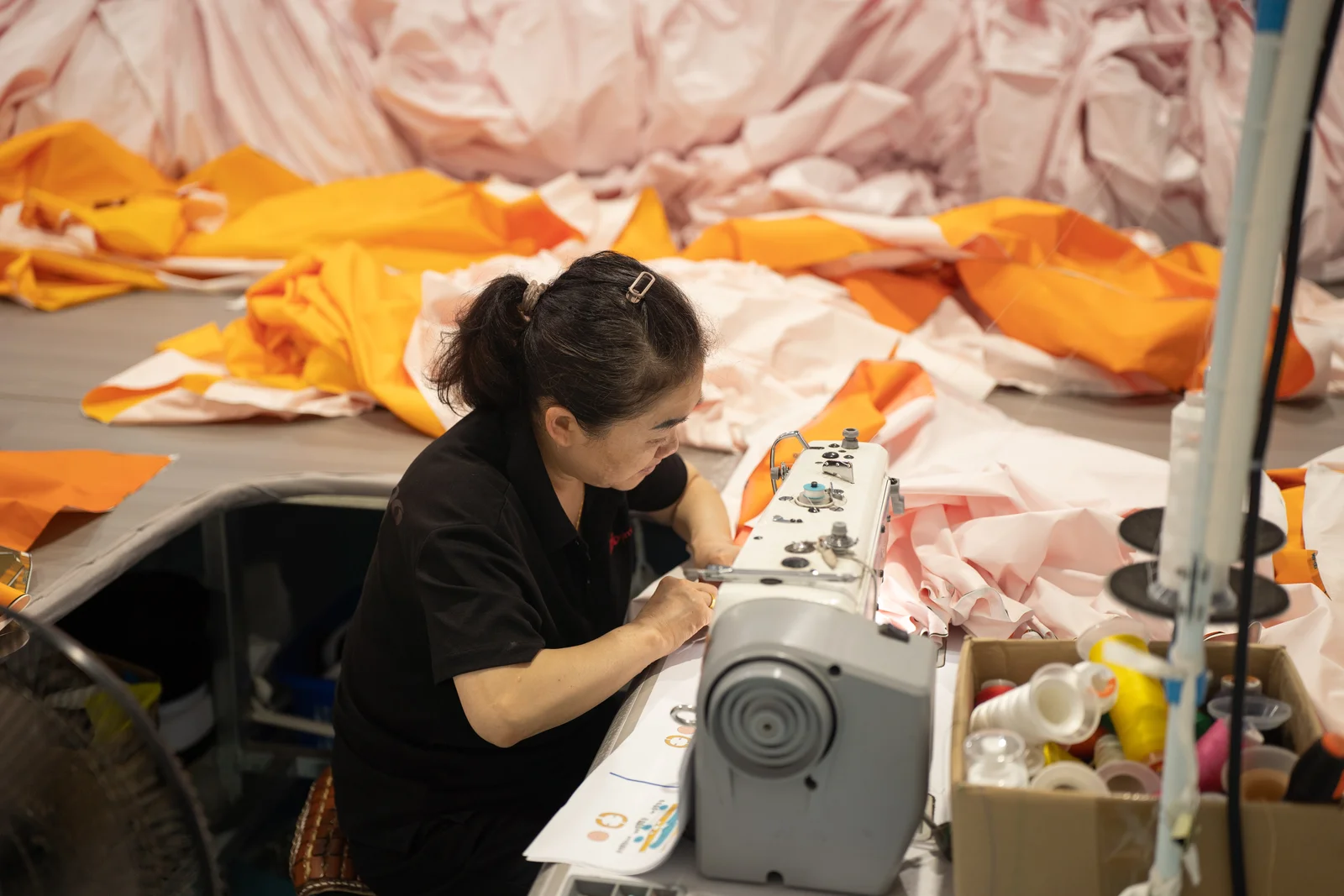
They behave differently because they are built differently. A constant air inflatable is sewn from fabric panels. At our factory, every seam is double-stitched, and stress points get bar tacking, a short row of dense stitches that stops a seam from pulling apart. Stitch holes let a small amount of air escape all the time. To keep up, we match each blower to the internal volume of the inflatable so it replaces air faster than the seams leak.
A sealed inflatable has no blower to make up for lost air, so the panels themselves must stop it. Sealed inflatables are welded closed instead of sewn. High-frequency welding melts the coated surfaces of two panels together, so the seam has no stitch holes. Helium escapes even more easily than air, so our helium inflatables use 0.18 mm polyurethane (PU) film with high-frequency welded seams. Each one passes a gas-tight inspection before delivery.
This construction difference explains the rest of the comparison. A constant air inflatable depends on its blower but tolerates normal air loss; a sealed inflatable works without power but has no way to replace air it loses.
Size: When Constant Air Becomes the Only Option
Size is the first check because above a certain size only constant air works. In our arch projects, sealed arches are typically limited to spans under 8 m, and constant air is required for city-scale arches and arches of 20 m or more.
| Piece and size | Air system |
|---|---|
| Arch, span under 8 m | Sealed or constant air |
| Arch, span 8 m or more | Constant air (beyond the typical sealed range) |
| City-scale or 20 m+ arch | Constant air only |
| Giant character, product replica or figure | Constant air with a 24/7 blower |
Giant inflatables follow the same rule. They run on commercial blowers rated for 24/7 operation, and each blower is matched to the internal volume of the inflatable; an undersized blower leaves the shape sagging.
Power Supply and Noise: What the Venue Has to Provide
When the size allows either type, the power supply decides next. A constant air inflatable needs electricity for every hour it is on display, from a wall outlet or a generator, and it collapses when the blower stops. A constant air inflatable therefore stays switched on the whole time it is up, including overnight if the event runs overnight. When the event ends, switch the blower off and let the inflatable deflate.
If the venue cannot guarantee power, plan the backup before the event. At a race finish line with no power outlet nearby, for example, you can use a sealed arch or run a constant air arch on a generator.
Noise is the other site factor. The blower hums steadily for as long as it runs, while a sealed inflatable is silent once inflated. Sealed inflatables therefore suit indoor events, short brand pop-ups and venues that need quiet.
Do Inflatables Use a Lot of Electricity?
A constant air inflatable uses as much electricity as its blower draws for the hours it runs; a sealed inflatable uses power only while it is being inflated. To estimate the cost, multiply the blower's rated power in kilowatts by the running hours and by your electricity rate. For example, a 1 kW blower running 10 hours a day uses 10 kWh per day.
Wind, Temperature and Event Length
The third check is how long the inflatable stays inflated and in what weather. A constant air inflatable keeps the same firmness through the day because the blower keeps adding air. A sealed inflatable holds a fixed amount of air, so its firmness follows the temperature.
The reason is the equation of state for gases, explained by NASA Glenn Research Center: for a fixed amount of air in a fixed volume, absolute pressure rises in proportion to absolute temperature. Warming from 15 °C to 35 °C raises the pressure by about 7%. A sealed inflatable outdoors is therefore firm in the afternoon sun and soft after sunset, and a large sealed inflatable may need air added during the day.
Wind affects both types, and both need full anchoring. Most large constant air inflatables can be used in wind up to about 30 km/h (15–18 mph). Once sustained wind passes 35 km/h (22 mph), deflate the inflatable, whichever type it is.
Both types can tear or be punctured. The difference is what happens next:
- Constant air: the blower keeps replacing the air that escapes, the same way it replaces normal seam loss.
- Sealed: nothing replaces the lost air, and the hole has to be repaired before the inflatable is used again.
For events that last weeks, constant air is the standard setup. Our largest landmark projects have stayed on continuous display for 2 to 6 weeks. For multi-month deployments on water, we add marine-grade materials and extra UV treatment. We also fit a redundant blower configuration: a second blower keeps air flowing if the first one fails. With proper use and storage, a commercial-grade arch or giant inflatable lasts 5 to 10+ years.
Which Should You Order? A Decision Table by Event Type
Applied to common projects, the three checks give these answers:
| Project | Choose | Deciding check |
|---|---|---|
| City-scale arch, giant character or product replica | Constant air | Size |
| Race arch with a power outlet nearby | Constant air | Power available; firmness holds all day |
| Race finish line with no power outlet | Sealed arch under 8 m, or constant air on a generator | Power |
| Indoor event or venue that needs quiet | Sealed | Noise |
| Outdoor event of several weeks, including on water | Constant air with a redundant blower | Event length |
| Mascot costume worn by staff | Constant air (battery fan) | Wearer moves freely |
The last row is a wearable form of constant air: a battery-powered fan inside the costume keeps air moving, which keeps the shape up while the wearer walks and also cools the wearer.
For most projects, choose constant air for large inflatables, outdoor sites and long events. Choose sealed when the inflatable is small and the venue either has no reliable power or needs silence.
What to Tell the Factory When You Request a Quote
Send the factory your answers to the three checks, and it can choose the air system for you:
- Size: overall dimensions, or the span for an arch.
- Power supply: whether there is a power outlet near the installation site, its voltage, and whether a generator is available.
- Site: indoor or outdoor, expected wind, and whether the space must stay quiet.
- Event length: hours, days or weeks, and how many times it will be installed.
Constant air inflatables ship with a blower, and sealed inflatables ship with an inflator; arch orders also include an anchoring kit, a storage bag and an installation guide. Every inflatable goes through a full 24-hour inflation test before shipment.
FAQ
By air system, there are three: constant air inflatables, kept up by a running blower; sealed inflatables, filled once with air and closed; and helium inflatables, sealed inflatables filled with helium so they float. Each type can then be made in many shapes, from arches and tunnels to giant characters.