Import Inflatables from China: Costs, Tariffs, Shipping and QC in 2026
Sourcing custom inflatables from China has become a popular choice for U.S. brands, event operators, and marketing agencies looking for cost-effective, fully bespoke designs. The price gap alone explains why: factory-direct pricing runs 30 to 50 percent below U.S. retail for the same specification, and a standard commercial bounce house listed at $1,500 by an American supplier often costs $800 to $1,000 from the Chinese factory that produced it.
Yet the import journey is full of hidden risks: unclear tariff classification, inconsistent factory quality, delayed shipments, and complicated U.S. customs procedures all sit outside normal purchasing experience. Having shipped more than 3,000 inflatable projects a year to buyers in over 40 countries, we have watched first orders succeed and fail at every one of these stages. This guide follows the sequence a real order moves through, using September 2026 duty rates and current freight costs, so you can budget accurately and avoid the mistakes that catch most new importers.
Why Import Inflatables from China?
The first reason is unit economics. Commercial inflatables carry several margin layers in the U.S. market: importer, distributor, and dealer each add their percentage before a unit reaches a product page. Buying direct cuts out most of that markup, so you pay closer to the real production cost. Published pricing from Chinese manufacturers lists standard commercial bounce houses at $300 to $800 and combo units at $600 to $1,500, against $1,500 to $3,500 at U.S. retail. Even after freight and duties, the landed cost advantage for commercial inflatables from China typically holds at 30 to 50 percent, and it widens with order volume.
The second reason is manufacturing depth. Inflatable production concentrates in Guangdong and Zhejiang, where fabric suppliers, large-format printers, and sewing workshops sit within the same industrial clusters. Custom work is the default there, not an upcharge: shape, size, full-coverage printing, and Pantone color matching are standard production options. Our own facility in Wenzhou covers 10,000 square meters with a 108-person team, and we have delivered more than 60,000 projects for over 200 brands since 2006. That depth of specialization is difficult to find outside these clusters.
Importing is not always the right call. Skip it when you need a single small residential unit, when your event is less than six weeks away, or when the order value is too low to absorb fixed import costs like broker fees and minimum freight charges. Importing pays when the specification matters, when quantities reach two or more units, or when the unit itself is large enough that the factory price gap covers several hundred dollars of logistics.
What Do You Need Before Importing?
Less than most buyers expect. The United States does not require an import license for inflatables, and the setup list fits on one page:
- An importer number. Your business EIN from the IRS serves as your importer of record number. Individuals can import using a Social Security number.
- A customs bond. Required for formal entries, which means most commercial shipments valued over $2,500. A single-entry bond covers one shipment; a continuous bond covers a year of imports and costs less once you ship regularly.
- A customs broker. Not legally required, but strongly recommended for first shipments. A broker files entry documents, confirms your tariff classification, and tells you the exact duty rate before you commit to an order.
- A delivery address that can receive freight. Commercial units ship on pallets. Confirm whether you need liftgate service before the truck arrives.
One boundary worth noting: import requirements and operating requirements are separate questions. Bringing a bounce house into the country needs only the items above. Renting it out commercially involves state-level rules, insurance, and safety practice such as ASTM F2374, which your supplier's documentation should support.
How to Find and Vet a Chinese Inflatable Manufacturer
Suppliers surface through Alibaba and Global Sources, through Google searches for terms like china inflatable manufacturer, and through trade shows such as IAAPA. Finding names is easy. The vetting work is separating actual factories from trading companies that present themselves as factories.
Three checks do most of the separation. First, ask for the business license: a manufacturer's registered scope includes production, while a trader's scope lists only sales and export. Second, request a live video call that walks the production floor. A real factory shows cutting tables, sewing lines, and printing equipment, not a showroom. If the camera keeps returning to finished products on display, you are likely talking to a reseller. Third, ask for a production video of a current order with your company name and the date written on a card next to the unit. Trading companies struggle to produce this on demand.
Specification literacy is the quieter vetting tool, because real factories answer technical questions with numbers. Ask what fabric weight they use and expect an answer in ounces, such as 15 to 18 oz PVC tarpaulin or reinforced oxford for commercial duty. Ask how seams are built and listen for double stitching with bar tacking at stress points. Ask which safety standards they build to, and EN 14960 or ASTM F2374 should come back without prompting. A supplier who answers these questions with adjectives instead of specifications is telling you something useful before you send any money.
Minimum order quantity scares buyers unnecessarily. For custom builds, genuine factories commonly accept single-piece orders, because every project is made to order anyway. Our own MOQ is one piece, whether the project is a 3-meter arch or a 20-meter character. You can see the range of what a single custom order covers in our custom giant inflatables catalog.
Landed Cost Breakdown: Product Price, Duties, Freight and Fees
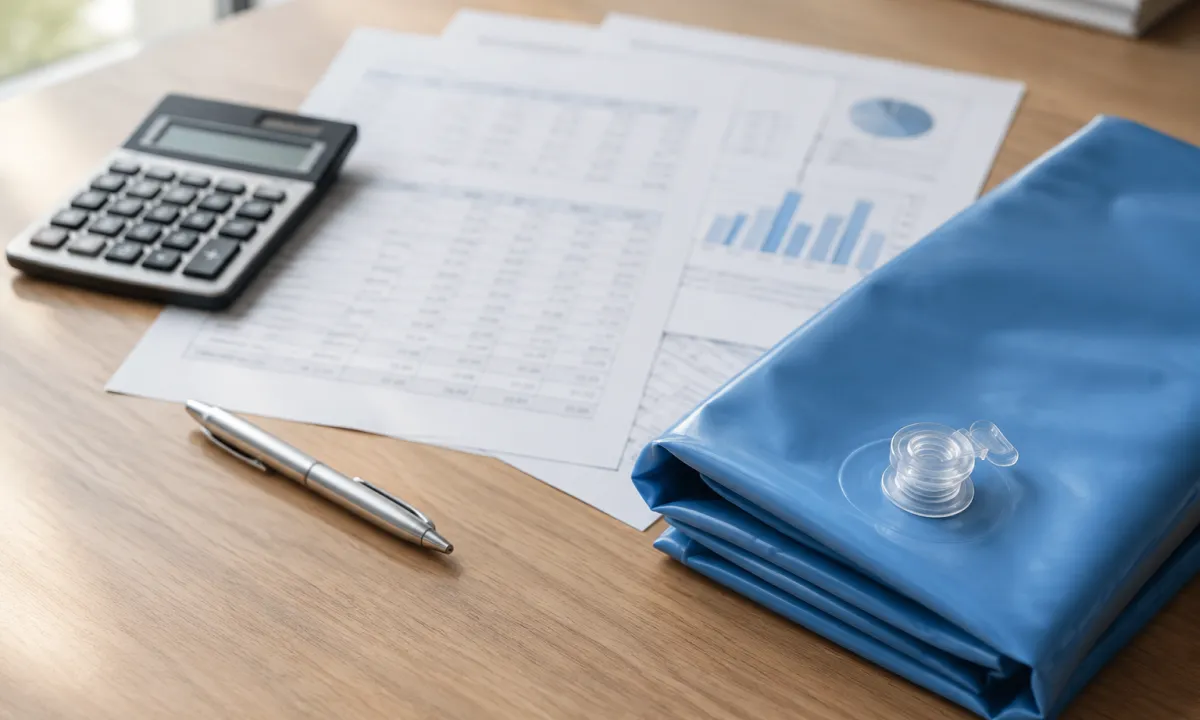
The number that matters is landed cost: everything paid until the unit sits in your warehouse. Landed cost equals the FOB product price plus freight, insurance, import duty, customs fees, and last-mile delivery. Comparing suppliers on FOB price alone is the most common budgeting error in importing.
Import duty deserves its own explanation because U.S. tariff policy moved several times in 2025 and 2026, and most published guides are already outdated. As of September 2026, the duty on Chinese inflatables stacks in layers: the base MFN rate set by the product's HTS classification, a 7.5 percent Section 301 rate that applies to some classifications, and a 12.5 percent Section 301 measure in effect since July 2026. The earlier IEEPA tariffs were struck down in February 2026 and no longer apply. What this means in practice: combined duty for most commercial inflatables currently lands between roughly 12.5 and 29 percent, depending on how the product is classified. Inflatable bounce houses classified as toys under HTS 9503 sit near the bottom of that range, while textile advertising inflatables such as arches and air dancers, classified under HTS 6307, sit near the top. An additional measure of about 7.5 percent is under discussion as this article goes to press, so confirm the current rate with your customs broker for your specific HTS code before pricing an order.
Classification is not a formality. A 2011 CBP ruling reclassified inflatable bounce houses from sporting equipment to toys, which moved their base duty to zero. Your broker can request a binding ruling when the classification of an unusual product is unclear.
A worked example shows how the layers add up. Take a custom printed advertising arch with an FOB price of $3,000, shipped by ocean LCL to a U.S. address:
| Cost layer | Amount | Notes |
|---|---|---|
| FOB product price | $3,000 | Factory quote including blower and repair kit |
| Ocean freight, LCL share | $450 | Varies with volume and season |
| Cargo insurance | $45 | Typically 1 to 2 percent of cargo value |
| Import duty, about 27 percent | $810 | Textile arch classification, September 2026 rate |
| Customs fees (MPF + HMF) | $37 | Percentage-based with minimums |
| Customs broker | $200 | Single entry |
| Port handling and last-mile delivery | $350 | Port fees plus drayage to your address |
| Total landed cost | About $4,900 | Roughly 63 percent above FOB price |
Against a comparable U.S. supplier price around $7,000 for the same arch, the landed saving is about 30 percent on a single unit. Batch orders improve the math further because broker, port, and freight costs spread across units, and toy-classified products save the duty difference on top. Treat every figure in this table as an illustrative example, then rebuild it with real quotes for your own order.
Sea vs Air vs Express: Choosing a Shipping Method
Three shipping methods cover nearly all inflatable imports, and the right choice follows from shipment size and deadline:
| Method | Door-to-door time | Cost level | Best for |
|---|---|---|---|
| Express courier (DHL, FedEx, UPS) | 5 to 10 days | Highest per kilogram | Samples, small units, urgent replacements |
| Air freight | 8 to 15 days | High, cheaper than express at volume | Urgent medium-size orders |
| Ocean LCL (shared container) | 25 to 45 days | Low per cubic meter | Single large units, small batches |
| Ocean FCL (full container) | 25 to 40 days | Lowest per unit at volume | Fleet orders, container-scale batches |
Ocean transit splits into port-to-port sailing (about 15 to 25 days to the U.S. West Coast, 25 to 40 to the East Coast), three to seven days of port handling, and two to five days of drayage to your door. A container of inflatables currently moves for roughly $2,200 to $2,500 in base ocean freight, before local charges at both ends.
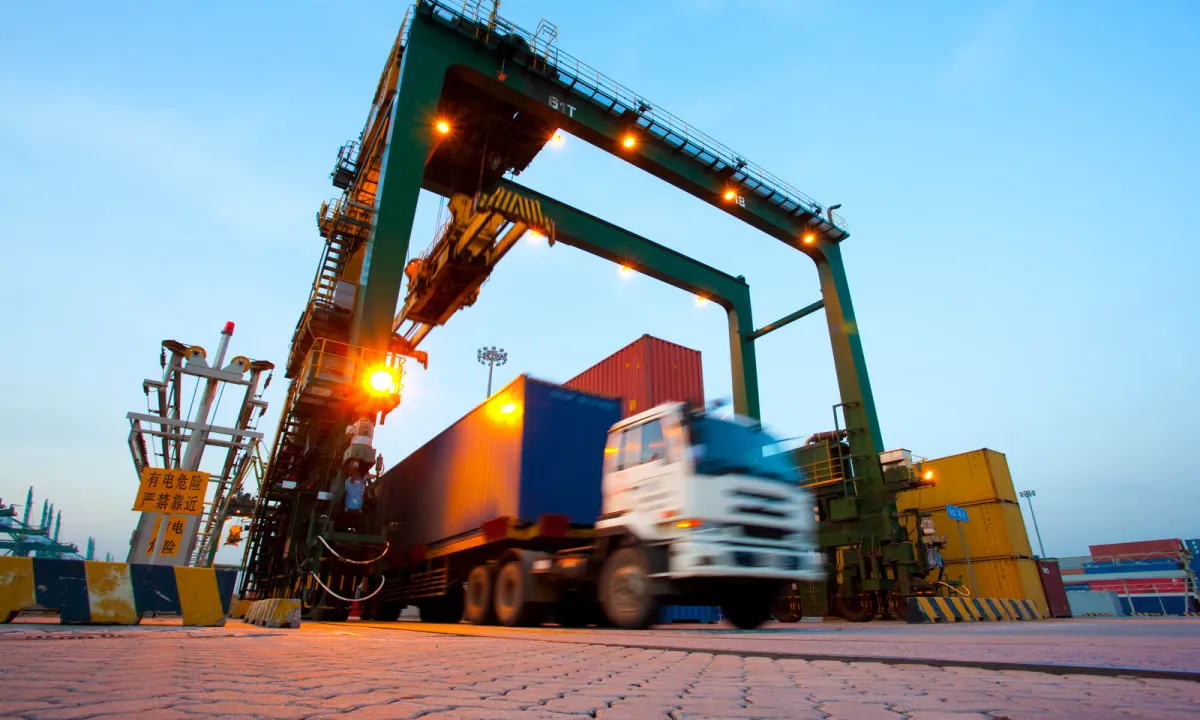
Incoterms decide who arranges and pays for each leg. EXW puts everything on you from the factory gate. FOB, the standard baseline, has the seller deliver the goods onto the vessel while you control the freight. CIF adds freight and insurance to your destination port. DDP means the seller handles the entire chain including duty payment and delivery to your door, which simplifies life for the buyer. Few factories offer it — we do, so if you want a single all-inclusive price, ask for a DDP quote alongside the FOB one.
Calendar risk matters as much as method. Chinese New Year shuts factories for two to four weeks around late January or February, and production slots fill in the weeks before it. Orders for spring and summer events should enter production well before the holiday, with ocean transit added on top.
Payment Methods and Contract Safety
The standard payment structure with Chinese factories is T/T wire transfer in two installments: 30 percent deposit to start production, 70 percent balance before shipment. The protection inside this structure comes from what you attach to the balance payment. Insist that the balance falls due only after you receive pre-shipment verification: photos and video of your actual unit fully inflated, plus its test records. A factory confident in its output has no reason to refuse this, and it converts your biggest payment into a checkpoint rather than a leap.
Three payment practices separate safe transactions from regrettable ones. Orders placed through Alibaba can run through Trade Assurance, which holds funds until shipment terms are met. Payments should always go to a company bank account matching the supplier's registered name, never to a personal account. And full payment upfront is a structure no buyer should accept, regardless of how the discount is framed.
The proforma invoice is where safety gets written down. A usable PI carries a specification annex covering dimensions, fabric weight, printing colors with Pantone references, blower specification and voltage, lead time, warranty terms, and included accessories. Custom projects need two more clauses: a delay provision that defines what happens if the shipment misses its window, and a design ownership clause stating that your artwork and shape design remain your property and cannot be reused or sold to other buyers. Factories doing licensed-character work will also ask you to confirm you hold the license for the character being produced; treat that question as a sign of a serious supplier.
Production and Quality Control: How We Make Sure Your Unit Ships Right
Once the deposit clears, a custom order moves through a defined sequence. Our own production runs a 12-step workflow from inquiry to shipment, and the quality-relevant stages concentrate in four places.
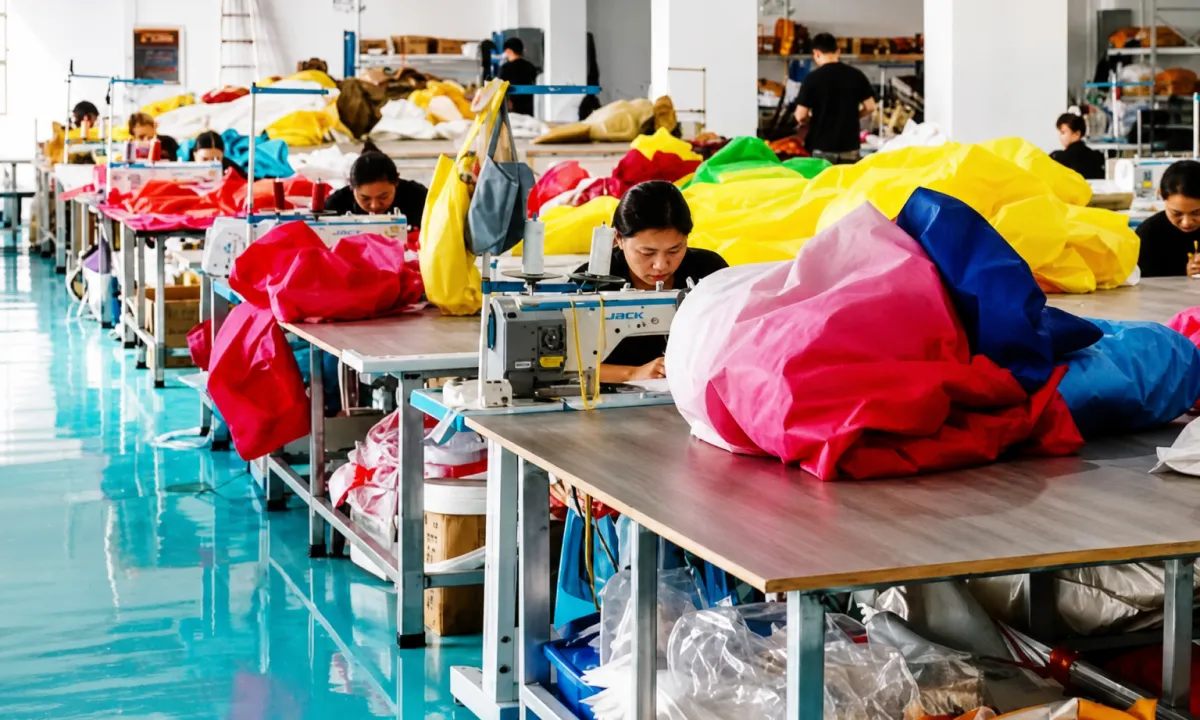
Design confirmation comes first. Our team builds a 3D model of the unit and revises it through as many rounds as needed until the client signs off; production does not start before written approval. Printing follows, on imported large-format machines running eight-color CMYK with Pantone matching across fabric widths up to 3.2 meters, which keeps brand colors consistent across the whole surface of a large unit.
Sewing is where durability gets built in. Our sewing crew numbers more than 50 workers, and every commercial seam is double-stitched with bar tacking at stress points, the construction that separates a five-year asset from a one-season liability. The final gate is testing: each unit passes a 24-hour pre-shipment inflation test covering air retention, seam integrity, and structural balance, with photos and video documented for the buyer before the balance payment falls due. The full manufacturing sequence, from pattern-making to packing, is covered in our article on how giant inflatables are made.
Certification and warranty terms belong in this stage too. Commercial units should carry CE and UL documentation where applicable, and a written warranty, ours runs 12 months, that states coverage in rental service. Production lead time runs 15 to 35 days depending on scale and complexity; rush production inside 15 days is available at a 20 to 30 percent premium. Build these numbers into your event calendar backward from the date the unit must be in your hands.
Customs Clearance and Receiving Your Shipment
For ocean shipments, the Importer Security Filing, known as ISF or 10+2, must be filed before the vessel loads in China. Your broker or freight forwarder handles it, but the legal responsibility sits with you as the importer, and late filing brings fines. Confirm who files before the ship date, not after.
The clearance document set is short: commercial invoice, packing list, bill of lading or air waybill, and your customs bond. The broker files the entry, customs assesses duty using your confirmed HTS classification, and you pay the duty invoice before release; under DDP terms we pay it on your behalf and you skip this step entirely. Keep every document; the same set supports warranty claims, insurance records, and future imports.
Receiving is the last checkpoint you control. Inspect cartons and pallets before signing the delivery receipt, and write any visible damage on the receipt itself before the driver leaves. Then test-inflate every unit within days of arrival, not weeks. Photograph and film any defect as it appears, because warranty claims across an ocean live or die on documentation. Keep the packaging until each unit passes its first full inflation.
Common Mistakes First-Time Importers Make
From the factory side, these are the problems we watch repeat across first orders:
- Comparing suppliers on FOB price alone, and finding out the real cost ranking only after freight and duties arrive
- Skipping the sample or pre-shipment inspection, and discovering the problem after the balance is paid
- Writing specifications as "same as the picture" or accepting "commercial grade" as a spec, which leaves fabric weight, seam construction, and blower rating to the supplier's discretion
- Pricing a project on an outdated tariff figure without checking the current duty rate first
- Missing the Chinese New Year cutoff and losing six weeks to the holiday plus port congestion
- Documentation errors that hold the shipment at the port once it arrives
- Ordering without a repair kit and spare blower — from our side of the factory this is one of the most common after-sales issues we see, and a low-cost part can ground an entire unit
- Choosing the wrong Incoterm, such as picking CIF to save money and losing control of the freight cost
Each of these has a fix written earlier in this guide. For the ordering side of the process, from design brief through approval to delivery, our guide on how to order a custom inflatable covers the workflow step by step.
Importing inflatables from China rewards buyers who treat it as a procurement project: verified supplier, written specification, landed-cost math, staged payments, and inspection before final payment. We have manufactured custom inflatables in Wenzhou since 2006, in a 10,000-square-meter facility where design, printing, sewing, and testing happen under one roof. Our team delivers more than 3,000 projects a year for clients in over 40 countries, with CE and UL documentation, a 12-month warranty, and a design proposal with factory-direct quotation returned within 24 to 48 hours.
If you are pricing a first import, send us your project brief with target dimensions and quantities. We will confirm the specification, quote FOB or DDP, and outline the freight options for your timeline, so the landed-cost math in this guide becomes a real number for your order.
FAQ
A single custom commercial inflatable typically quotes at $800 to $3,000 FOB, and landed cost adds roughly 40 to 60 percent for ocean shipping, duty, customs fees, and delivery. In our worked example, a $3,000 custom arch lands at about $4,900. Batch orders reduce the per-unit logistics share.