Giant Inflatable vs Traditional Signage: An Honest ROI Comparison
Clients ask us this question in one form or another every week: "We have a fixed outdoor budget — should it go into a billboard, an LED screen, or a giant inflatable?" The honest answer is that they solve different problems. Signage buys sustained exposure in one location; a giant inflatable buys concentrated attention, photography and foot traffic wherever you place it, and you own the asset afterward. This article puts real numbers against each format so you can run the comparison yourself. It draws on 20 years of building custom giant inflatables for brands, and on published 2026 rate data for the signage side.
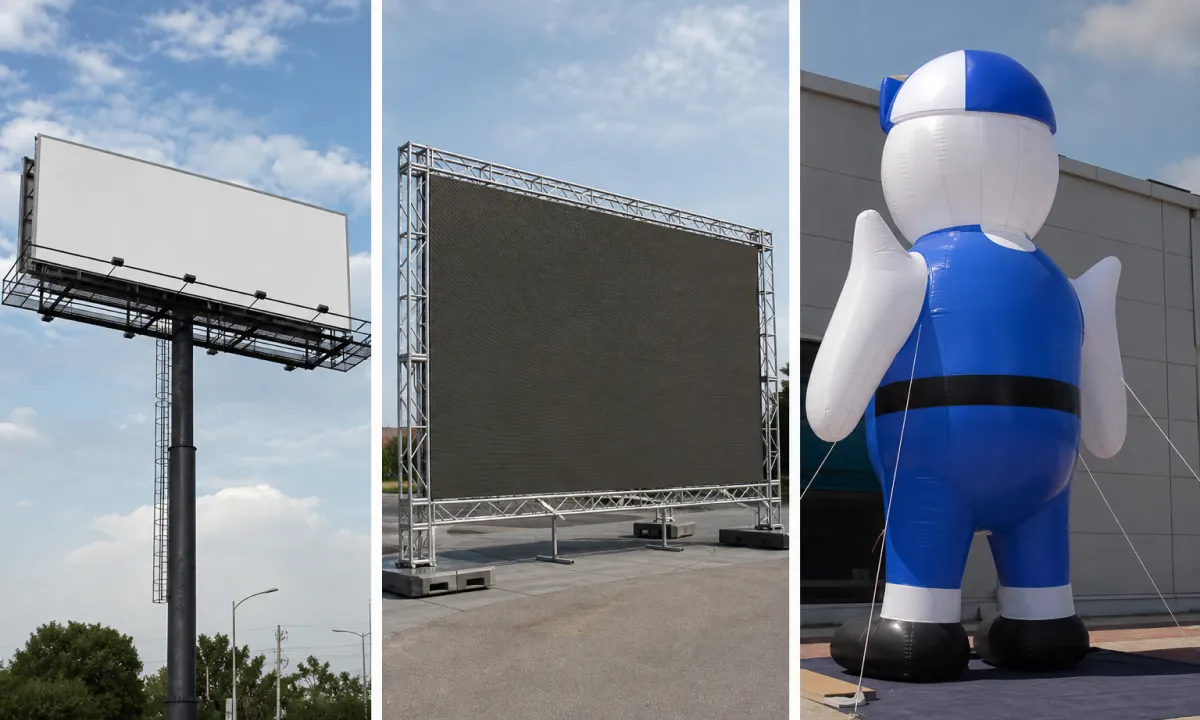
The cost comparison: inflatable vs billboard vs LED screen
The structural difference is simple. Traditional signage is rented by the month; an inflatable is purchased once. That changes how every dollar behaves over time.
| Format | Typical cost (2026) | Cost model | What you own after 12 months |
|---|---|---|---|
| Static billboard | $250–$14,000 per 4-week cycle; US national average around $3,900 | Recurring rental + $700–$1,500 print and install per creative change | Nothing |
| Digital LED billboard slot | $1,200–$15,000+ per month, roughly 30–50% above static; premium metro placements far higher | Recurring rental, shared rotation with other advertisers | Nothing |
| Owned LED screen | $100,000–$500,000+ built, or $500–$1,000 per m² for panels alone | Capital cost + power, permits, maintenance; fixed to one site | A screen you cannot move |
| Custom giant inflatable | Low four figures to mid five figures one-time, depending on size and complexity | One-time purchase + minor logistics per deployment | A reusable brand asset with years of service life left |
Run the twelve-month math on a mid-market example. A decent static billboard at $3,000 per cycle costs about $39,000 a year, plus creative changes, and the spend disappears the day the contract ends. A 6-meter custom inflatable mascot in the same budget range is paid for once, deploys at every event, opening and seasonal campaign you run that year, and is still in the warehouse ready for year two. For a detailed breakdown of what drives inflatable pricing, see our custom giant inflatable cost guide.
What the raw numbers miss
Billboards are priced on impressions — CPMs of roughly $5–$18 in 2026 — and they deliver those impressions passively to traffic that happens to drive past. An inflatable's audience is smaller but self-selected: people who are already at your store, your event, your festival. Comparing the two on CPM alone undervalues what the inflatable is actually doing, which is converting attention at the point of action, not building reach along a highway.
Visual impact: the case for three dimensions
Every billboard on a commercial strip competes with every other billboard on that strip, and the human brain is efficient at filtering repeated flat images into background. Drivers who commute the same route stop seeing the same board within weeks. A 10-meter inflatable does not get filtered, because it breaks three patterns at once: it is three-dimensional, it is enormous relative to its surroundings, and it moves slightly with the air. Motion and scale are exactly the triggers the visual system prioritizes.
There is a reason the format keeps appearing at the top of the attention economy — Macy's parade balloons, festival art installations, mall atrium takeovers. Nobody photographs a lightbox. People queue to photograph a giant inflatable.

Social media: the multiplier signage doesn't have
Here is the part of the ROI equation that most cost comparisons skip. A billboard's reach ends at the people who physically see it. A giant inflatable generates a second audience online, because visitors photograph it and post it themselves. Every large deployment we produce becomes a photo point by default; the branded content spreads on Instagram, TikTok and Xiaohongshu at zero media cost. Touring inflatable art shows have drawn millions of paying visitors on the strength of this shareability, and brand activations use the same mechanics: the inflatable is the ad, the visitors are the distribution.
For measurement, this is straightforward to track — branded hashtag volume, geotagged posts, and UGC counts during the deployment window, set against the amortized cost of that deployment. Brands that run the numbers usually find the earned-media value alone covers a large share of the asset cost within the first few uses.
To put the mechanism in one sentence: giant inflatable advertising works because it converts a media expense into a photo opportunity, and photo opportunities recruit the audience to do the distribution. A rented billboard cannot do this. Passersby do not post billboards; they post the 12-meter character they can stand next to. That difference is why the same budget produces flat, predictable reach in one format and compounding, shareable reach in the other.
Reusability: how cost per deployment collapses
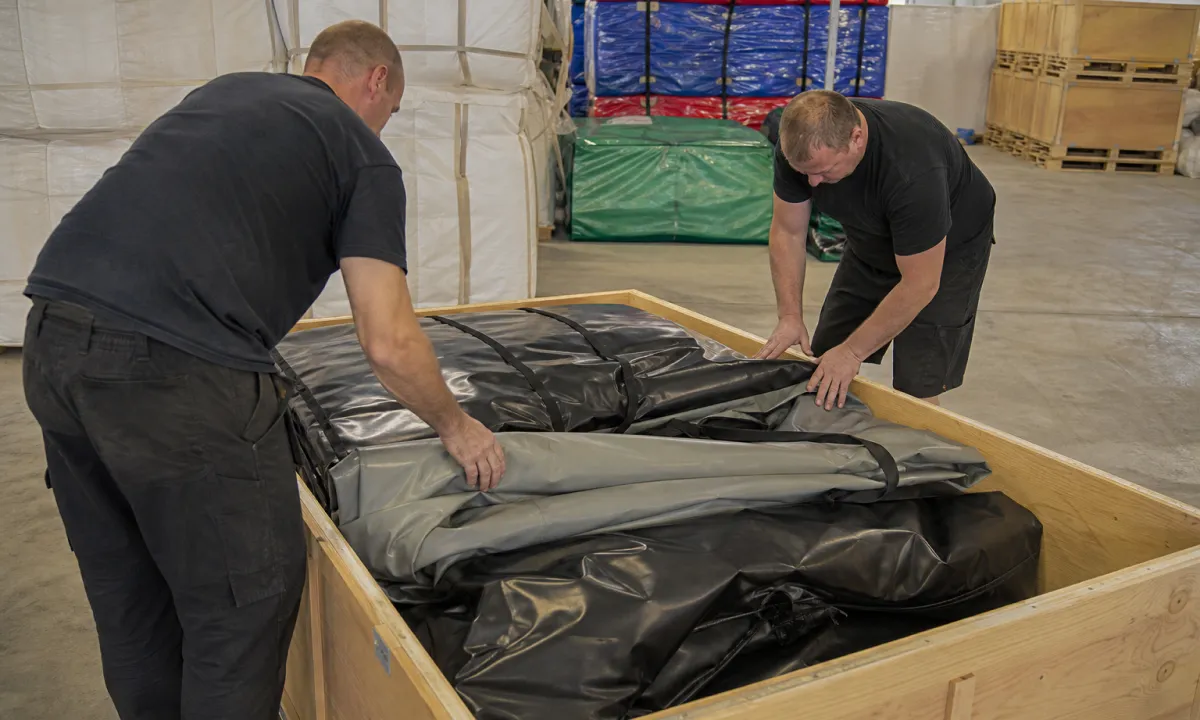
This is the core ROI argument, so we will state it plainly: a properly built and maintained commercial inflatable serves five to eight seasons. Divide the purchase price by realistic usage and the per-event cost drops below almost any comparable format.
- A $15,000 giant inflatable used 20 times over four years costs $750 per deployment before logistics.
- The same shape can be redeployed across cities and venues — pack volume is a few shipping crates, and setup takes hours, not days.
- Creative refreshes are cheap relative to signage: swap banners, add seasonal accessories, or re-skin sections instead of reprinting an entire campaign.
- Smaller formats push the economics further. An inflatable tube man runs on a single blower outside a storefront every day of the year for a one-time cost comparable to one or two months of billboard rental.
Where traditional signage still wins
A fair comparison names the other side's strengths. Choose a billboard or LED screen when the goal is continuous 24/7 presence in one fixed location over months — commuter-corridor brand building, directional advertising near an exit, or always-on local awareness. Screens also win when the message changes daily, since content swaps are instant and free. Inflatables need open space, a power source for the blower, and wind management outdoors; they are a campaign and event tool, not a permanent street fixture. Most sophisticated marketers we work with use both: signage for baseline reach, inflatables for the moments that need a spike of attention.
What we see from the production floor
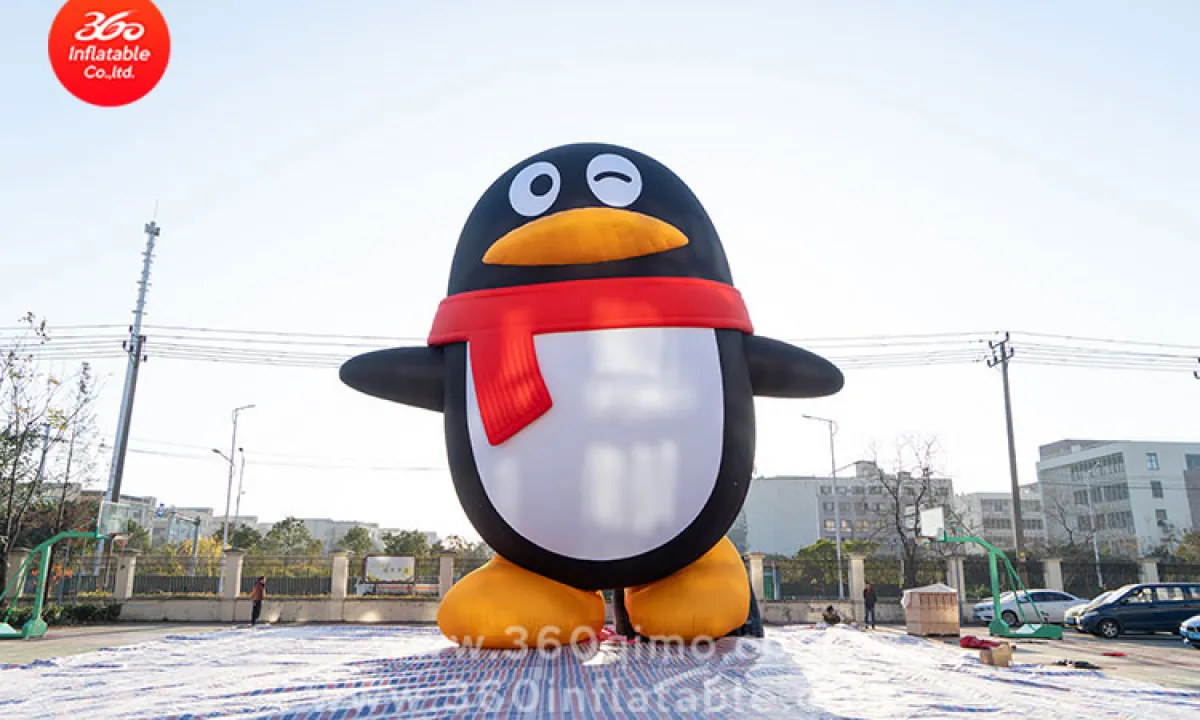
Our client list — Tencent, JD.com, Alibaba, OPPO, POP MART, Xiaohongshu among them — keeps ordering giant inflatables for the same three jobs: product launches, festival and event presence, and retail traffic. The 15-meter Tencent penguin placed outside a venue, the floating ducks built for Xiaohongshu's street festival, the blind-box character figures scaled up for mall campaigns — each of these earned press coverage and social volume that a rented media placement at the same cost would not have produced, and each went back into storage afterward for the next campaign. That redeployment habit is the quiet part of the ROI that never shows up in a rate card.
How to decide: a short checklist
Ask four questions. First, is your goal sustained reach or concentrated impact? Reach favors signage; impact favors the inflatable. Second, do you run multiple events, openings or seasonal campaigns a year? If yes, an owned asset amortizes fast. Third, does your brand have a mascot, product or character worth building at scale? Recognizable shapes multiply the social effect. Fourth, what is your twelve-month total cost, not your first-month cost? Rentals look cheap monthly and expensive annually; inflatables look expensive up front and cheap by year two. A fifth, practical question: do you have somewhere dry to store the asset between uses? Storage and basic maintenance are the only ongoing obligations ownership brings, and they are what protect the multi-year economics.
Get the numbers for your specific campaign
If you are weighing an inflatable against a signage contract, send us your use case — the venue, the dates, the shape you have in mind — and we will quote the build with a realistic per-deployment cost model, free 3D concept included. As a factory that has produced over 3,000 projects a year for two decades, we can also tell you honestly when a billboard is the better tool for what you are trying to do.
FAQ
Over a campaign year, usually yes. A mid-market US billboard averages around $3,900 per four-week cycle - roughly $39,000 annually plus print and install fees for each creative change - and the spend ends with the contract. A custom giant inflatable in a similar budget range is a one-time purchase you redeploy across every event and campaign for five to eight seasons.