Giant Inflatable Product Replicas for Brand Marketing
An inflatable product replica takes the thing you sell — a bottle, a sneaker, a cereal box, a medical device — and rebuilds it at ten or twenty times life size. The result is one of the most direct forms of advertising a brand can buy: instantly recognisable, impossible to walk past, and built to be photographed. This guide covers how brands use giant product replicas, with real campaign examples from food and beverage, beauty and sports; how 3D modeling turns your product into an accurate inflatable; how to choose between sealed-air and continuous-air construction; and how to size a replica for your venue. It is written from the manufacturer's side of the table.
Why product replicas work as marketing
Packaging recognition is the foundation. A consumer who cannot recall your ad can still recognise your bottle from two hundred metres away, because the shape and label are already stored in their memory from the shelf. Scaling that package up turns an existing brand asset into a landmark, without spending anything on explaining what it is.
The commercial case is documented. When Federal Premium Ammunition launched its Prairie Storm shotshell, it commissioned an exact replica of the product box at 25 feet high, 25 feet wide and 14 feet long — 592 pounds inflated. The box toured grand openings, dealer shows and consumer events, pulled press coverage, and the company credited it with helping lift product sales. Regional sales reps across the Midwest started requesting it for their own events. That is the pattern with a good replica: one build, many deployments, and the cost per appearance keeps falling.
There is also a social media mechanic working in your favour. People photograph unusual large objects and share them without being asked. A 20-foot sneaker outside a store generates location-tagged posts that read as organic discovery, not advertising. The replica earns media space you do not have to buy, and every share carries your packaging into a feed it could never reach from the shelf.
The main categories, with real brand cases
Food and beverage
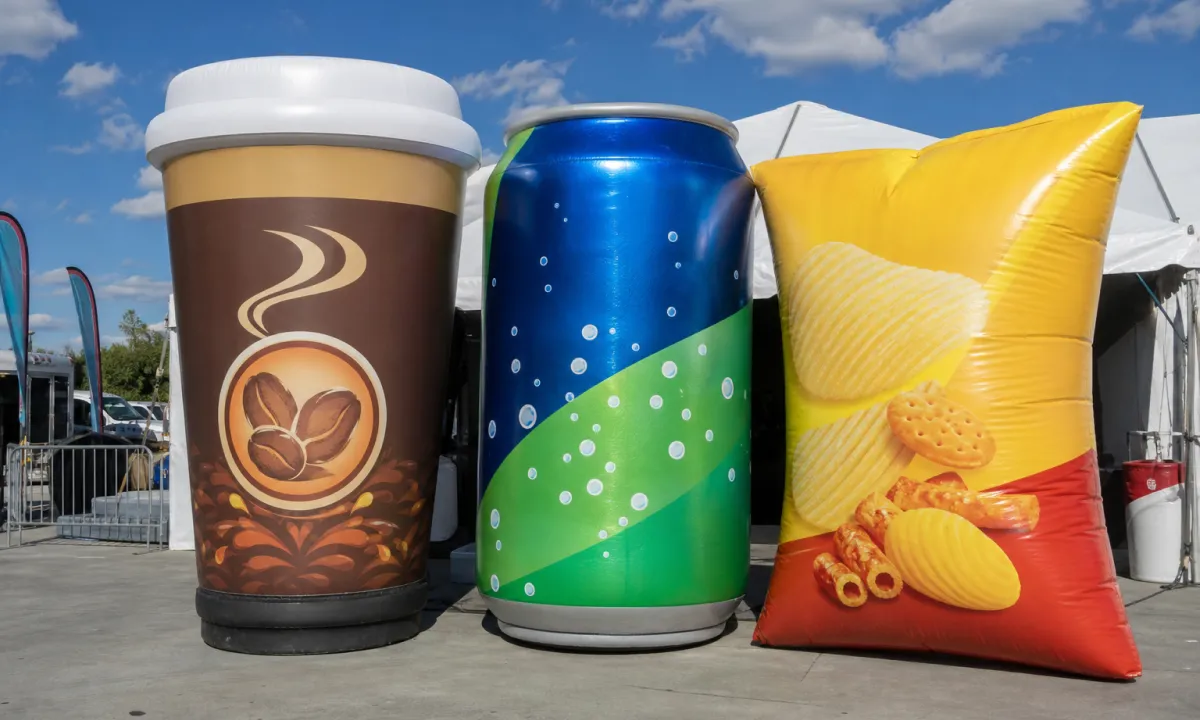
The most active category, because appetite appeal scales well. Documented examples include Dunkin' Donuts and Carl's Jr drink cups, a Daybreaker vodka canned cocktail outside tasting events, ranch dressing and chocolate milk bottles, Wheaties cereal boxes, an 8-foot Eureka bread loaf for a product launch, and a giant milkshake outside Freddy's Steakburgers locations. King's Hawaiian and Wendy's have both toured meal replicas. The form
la is consistent: put the product where foot traffic already is, and let the photos do the distribution.
Beauty and personal care
Toothpaste boxes, detergent bottles, shampoo and skincare packaging. In this category the package is the brand, so label fidelity matters more than structural drama. The replica lives or dies on print quality: typography, colour accuracy and finish.
Sports and lifestyle
Sneakers, tires, baseballs and soccer balls. Tire retailers run replicas from 6 to 20 feet as permanent roadside attention. For the 2026 World Cup, brands and sponsors have commissioned soccer ball replicas from 6 to 15 feet for fan festivals, watch parties and stadium entrances — a reminder that replicas also piggyback on event calendars.
Tech and industrial products
The strongest trade-show play. Nanosonics toured a giant replica of its Trophon medical device and turned a booth product into a stop-and-stare landmark. Valves, airbags and appliances follow the same logic. At the extreme end, the Australian Space Agency commissioned a 10-metre astronaut for the International Astronautical Congress in Sydney: engineered anchoring with 3,900 kg of ballast, a 45 km/h wind rating, and wall-to-wall media coverage. The rule across all four categories: the more specific the product, the stronger the stop-power.
Replica or mascot: which one does your company need
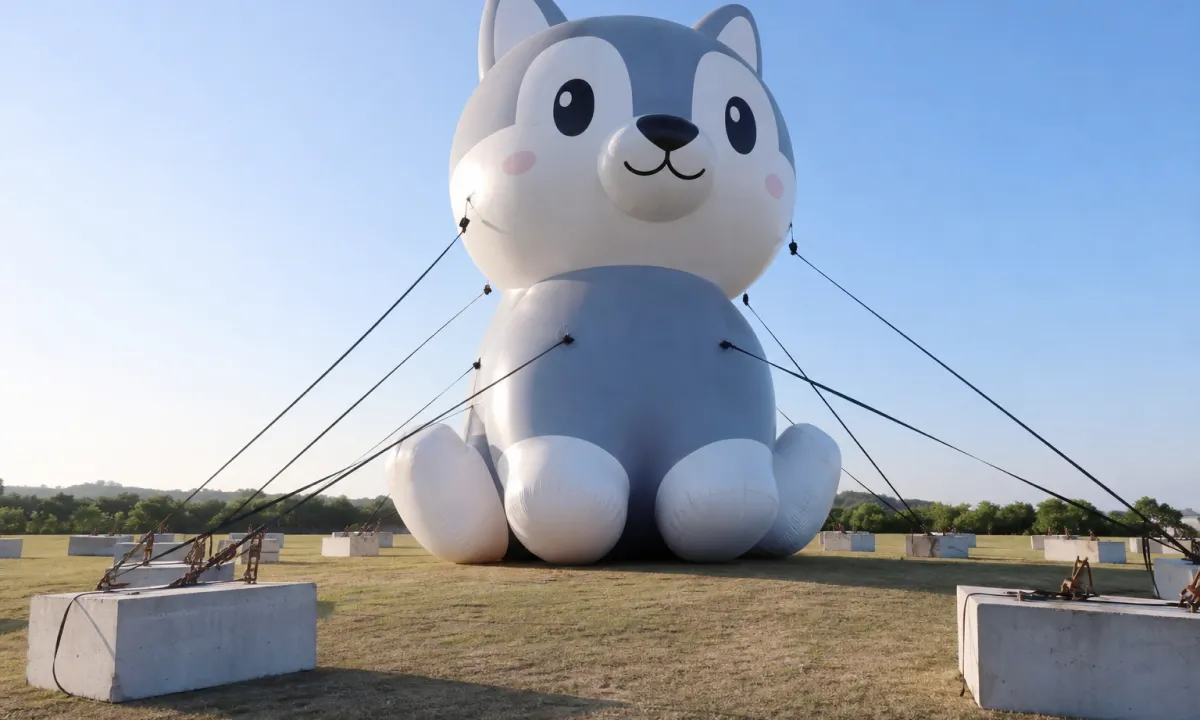
Buyers often weigh a product replica against a brand mascot. They do different jobs. A replica sells the product itself: it says "this is what we make, and you already know it." A mascot sells the brand personality: it gives the company a face, walks through a crowd, hugs children and stars in videos. Product-first campaigns — launches, retail openings, trade shows — usually get more from a replica. Awareness and community campaigns often get more from a custom inflatable mascot. Many brands run both: the mascot works the crowd at ground level while the replica anchors the skyline above it.
From product to replica: how 3D modeling drives accuracy
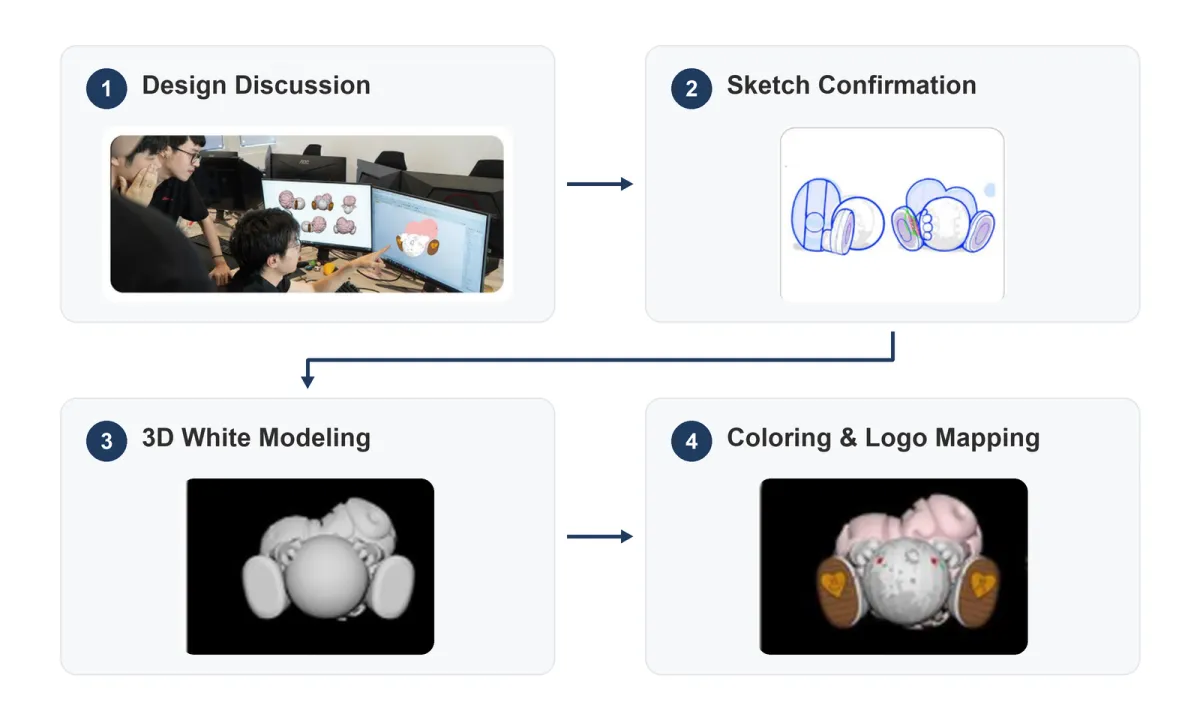
A convincing replica is an engineering exercise, and the pipeline is predictable:
- Reference intake. You provide product photos from all sides, key dimensions, label artwork and Pantone codes. Physical samples or CAD files make it faster.
- 3D modeling. The product is rebuilt digitally, with proportions checked against the real object. You approve a rendered preview before anything is cut.
- Pattern unwrapping. The model is unwrapped into fabric panels, with seams placed where they will be least visible.
- Dye-sublimation printing. Labels, typography and colour gradients are printed directly into the panels at full resolution — the step that decides whether the label reads correctly from across a hall.
- Sewing and reinforcement. Panels are double-stitched, with reinforcement at stress points and anchoring loops.
- Inflation testing. The finished giant inflatable is inflated, photographed against the reference and checked before shipping.
Label fidelity is where replicas succeed or fail. A distorted logo or a wrong colour temperature reads as a knockoff, so insist on a 3D approval round and Pantone matching before production starts.
Sealed air vs. continuous air: picking the construction
Replicas come in two constructions, and the choice follows the venue.
| Factor | Sealed air (airtight) | Continuous air (blower) |
|---|---|---|
| Power needed | None after inflation | Blower runs constantly |
| Noise | Silent | Low blower hum |
| Best venue | Indoor trade shows, photo ops, hanging displays | Long-term outdoor, rooftops, roadside |
| Weather behaviour | Pressure shifts with temperature | Self-adjusting, stays firm |
| Typical fabric | Airtight PVC, heat-welded | Oxford fabric, stitched |
For a three-day expo, sealed construction keeps the booth quiet and cable-free. For a rooftop that runs for months, continuous air is the standard answer.
Choosing the right size
Size follows viewing distance and venue limits, not ambition.
| Venue | Typical size | Why |
|---|---|---|
| Trade show booth | 2 – 4 m | Ceiling and booth-line limits; needs to read across the hall |
| Retail storefront / rooftop | 4 – 8 m | Reads from the street; anchors to ballast or structure |
| Festival, stadium, landmark | 8 – 15 m+ | Crowd-scale photo point; engineered anchoring and wind rating required |
Portability is the hidden advantage at every size. That 8-foot bread loaf weighs 32 pounds and packs into a 19-inch cube, blower included. Even the 25-foot ammunition box travelled between dealer events in a trailer. A replica campaign can tour ten cities with one build.
Deployment scenarios and logistics
The proven scenarios are grand openings, trade shows, product launches, touring activations and sponsorship zones. Setup takes minutes: unroll, connect the blower or inflate and seal, anchor, done. Outdoor pieces need a wind plan — stakes, ropes or weighted ballast, with engineered anchoring for anything above 8 metres. For evening events, internal LED lighting keeps the replica working after dark, which matters for festivals and retail locations with night traffic.
Plan the replica as a reusable asset from day one. Brands that get the best return deploy the same piece across a season of events instead of a single appearance, and store it properly between uses.
Measure the result like any other channel. Track foot traffic at the location during the deployment, count tagged photos and mentions, and ask visitors how they found you. Tire retailers and western-wear stores have both reported tracing walk-in customers directly to their rooftop replicas — one retailer calculated that the piece paid for itself within the first year. A replica is a physical ad buy with a measurable payback, not a decoration.
Start your replica project
To quote and design a replica, we need four things: product photos from all sides, key dimensions, label artwork in vector format, and your Pantone references. You approve a 3D rendering before production, and manufacturing typically runs 20 to 40 days depending on size and complexity. If your campaign needs a brand character rather than a product, our custom mascot line covers that too. Send us the product, and 360 Inflatable will come back with the build plan, size recommendation and deployment advice to match your calendar.
FAQ
An inflatable product replica is a custom-built, oversized inflatable copy of a real product — a bottle, can, shoe, box or device — used for brand marketing at events, retail locations and public spaces. It turns an existing packaging asset into a landmark that people recognise instantly and photograph.